Monday, April 9, 2018

Lynch speaks -- but never apologizes


Lynch also addressed her chance encounter with former President Bill Clinton in June 2016. She reiterated that the discussions on her plane on a tarmac in Phoenix were purely social, saying the two "talked about innocuous things."
Lynch again insisted she and the former president did not talk about Hillary Clinton, the subject of a Justice Department review over her use of a private email server, or any other criminal investigations.
Instead, Lynch said Bill Clinton told a "long but charming story" about grandchildren. The two also chatted about "issues of the day," such as Brexit.
The former attorney general said the controversial exchange "turned into a much longer conversation than it should have," and that it was fortunate when one of her staff members boarded the plane and brought up "how we all had to move on to our evenings.
We talked about “issues of the day” – that would, Ms. Lynch, include Hillary Clinton’s investigation which was about to be officially closed.
But what really enrages me is that you’re not just supposed to maintain no conflicts of interest when you are a political appointee, you are also supposed to avoid anything that could appear to be a conflict of interest.  Anything that could lead the average citizen to question your motives is supposed to be avoided. 
Loretta Lynch is a failure.  She met with the husband of someone who was the subject of a criminal investigation.  She also insisted that people below her not call it a criminal investigation.  When the public learned of her meet-up with Bill Clinton, her concern was who leaked it not that happened.
 
 
Ms Lynch is also disagreeing with James Comey regarding whether or not the decision to not call it a criminal investigation made Mr. Comey worried.  CNN reports:

Former Attorney General Loretta Lynch says former FBI Director James Comey didn't appear concerned by the decision to call an inquiry into Hillary Clinton's private email server a "matter" rather than an "investigation."
Lynch's comments in an interview with NBC News released Monday are in contrast to congressional testimony Comey gave last June, when he said her handling of the probe gave him a "queasy feeling."
Lynch said that her meeting with Comey about the probe "was a meeting like any other we had where we talked about the issues. We had a full and open discussion about it."
"Concerns were not raised," she added.


So who is telling the truth there?  They are both sketchy people at best.


This is C.I.'s "Iraq snapshot" for today:


Monday, April 9, 2018.  Elections approach but not a lot of optimism about them in Iraq.

May 12th, Iraq is scheduled to hold elections.  In a sign that the campaigning has already begun, violence has already started.  AFP reports:

 A suicide attack targeting a political party headquarters in western Iraq has killed four people and injured seven others, including a candidate in polls set for May, officials said Sunday. On Saturday evening "two suicide bombers disguised as soldiers entered the Al-Hal Party headquarters", one of most prominent parties in the Sunni-majority province of Al-Anbar, a local security official told AFP on the condition of anonymity. 


A lot of countries are interested in the elections -- or, in the case of the US and Iran, 'interested' (the governments of both countries have always felt they could dictate the outcome to Iraqis).


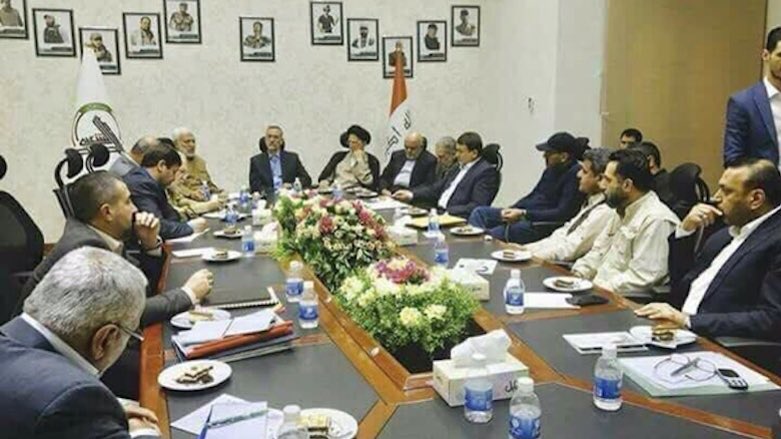
The al-Fateh electoral coalition, composed of backed Hashd al-Shaabi militia factions running for the Iraqi parliamentary elections in May, held a meeting on Sunday in with the participation of an Iranian military and diplomatic delegation

📸

‪The al-Fateh electoral coalition, composed of #Iran backed Hashd al-Shaabi militia factions running for the Iraqi parliamentary elections in May, held a meeting on Sunday in #Baghdad with the participation of an Iranian military and diplomatic delegation‬
‪#Iraq‬
‪📸‬


The elections for 2018 look a lot like the elections for 2014 and for 2010.


And you will find
while in the wind
something that you lost
The dream was never over, no
The dream was only lost

"Straight Back," written by Stevie Nicks, first appears on Fleetwood Mac's MIRAGE

And, yet again, it appears to many that the election will be lost again.  Majed al-Samarai (ARAB WEEKLY) explains:


In the race for the 2018-22 parliament, we still find the same old figures who refuse to withdraw from the playing field. All the big names, such as Nuri al-Maliki, Haider al-Abadi, Iyad Allawi, Ammar al-Hakim, Osama al-Nujaifi and Muqtada al-Sadr (even though the latter has a special status) are present.

Of course, some new faces, always from the Shia house, have been injected into the tired and boring game. These new elements usually give a hint about the identity of the most influential playmaker in Iraq, namely Iran.

The game was rigged right from the beginning, following a well-timed plan and with the consent of a former partner in the crime, namely the Americans.

In perfectly choreographed speeches, the different stars play their cards. Maliki still holds to his old religiously inspired political programme. He never tires of repeating “Election Day is like judgment day.”

Hakim has the wisdom to call on young Iraqi Shias to step forward and bear the responsibility of the coming phase but seems to have overlooked that those young people are ravaged by unemployment and drugs.

In a surprising move, Allawi chose to innovate by striking alliances with traditional Sunni leaderships. His discourse, however, has not changed. He is still pushing to move to reforming the political system.

Finally, Abadi is still trying to cash in on the victory over the Islamic State but his promises of fighting corruption produced no tangible results.


Hayder al-Abadi staked his future on the premature claim that he vanquished ISIS in Iraq.  That, of course, hasn't proven to be the case.  XINHUA reports, "At least two security forces members were killed and seven others injured Monday in a clash with four suicide bombers from the extremist Islamic State (IS) group in the western Iraqi province of Anbar, a local security source said."  ISIS was supposed to be Hayder's big claim to fame.


Instead, his biggest claim to infamy is just how ineffective he can be.  MEM reported last month, "Iraqi Prime Minister Haidar Al-Abadi yesterday ordered an immediate investigation into allegations that fake jobs in the public sector were being offered to citizens by political parties in order to win votes in the country’s upcoming general elections."  ALSUMARIA reported last week that the Badr Organization's Hadi al-Amiri stated they would eliminate corruption.  He stated that they would create needed jobs and punish those who had stolen Iraq's wealth.  Hadi is a militia thug and he's also one of the corrupt -- most infamously, he ordered a plane  to remain on the runway and wait for his spoiled son Mahdi to make the flight but the plane left Lebanon without Mahdi on board so al-Amiri, then-Minister of Transportation in Iraq, refused to allow the plane to land.  It caused quite an uproar -- as CNN noted in real time.

THE BAGHDAD POST reports, "Candidates in the upcoming elections' behaviors will make the elections process the worst in Iraq's history, MP Kazim al-Sayadi said on Saturday.  In a press statement, Sayadi said the candidates are trying to bribe voters or intimidate them and that will produce a weak and corrupt parliament."


Corruption also includes the seeling of voter cards.


The price of the voter card in Nineveh is "$200" .
According to the MP Nahla al-Hababi.
.


Adnan Hussein (AL ARABIYA) offers:

Now that we are ahead of parliamentary elections, reasonable men must realize that those who caused all this damage to the country and its people cannot be counted on and granted confidence again.
These representatives have had their chance and much more, and they do not even feel guilty for not improving the situation and they have not admitted to their mistakes. This signifies stubbornness and arrogance. Saddam Hussein himself was stubborn and arrogant thus leading to Iraq’s destruction. The damage of the past 15 years due to political Islam groups is a result of Saddam’s destruction and it further completes it.


With elections weeks away, IRAQI SPRING MC lists the voters' concerns:


The  anniversary of the occupation of Iraq:

The concerns of the Iraqis have focused on the services enjoyed by our ancestors in the last century, such as drinking water, electricity and hospitals.
Press reports


On the occasion of the anniversary of the occupation of Iraq
The Security is still the primary concern as for the citizen.

Press reports


The people who have been in charge of Iraq post-2003 invasion have not been Iraqis.  They've been exiles, cowards who fled and only returned after the US invasion.


Fa'iq Al-Sheikh Ali :The overthrow of the regime of Saddam Hussein is a great effort achieved by America and not by those who are ruling Iraq now because they did not offer anything to people.
.


-1:20


649 Views

فائق الشيخ علي: اسقاط نظام #صدام_حسين انجاز كبير والفضل فيه يعود لامريكا وليس لمن يحكم #العراق الان لانهم لم يقدموا اي شيء للشعب


LikeShow more reactions
Comment


The government has so little legitimacy among the people because it is not of the people.  It is a government of exiles who chose to leave Iraq and live outside it for decades.  They were installed as puppets by the US after the invasion.

The reason US troops remain on Iraqi soil is to prop up this government.

It's a point few appear willing to concede.  (They grasp it, even if they pretend otherwise.)


Marc Thiessen spent the lead up to the Iraq War writing speeches for Bully Boy Bush and Donald Rumsfeld.  That alone should leave him sidelined today.  Instead, THE WASHINGTON POST has made him a syndicated columnist.  Does he use that platform to atone for his actions?  Nope.  Does he try to learn from his mistakes?  No.

He just calls for more war.  In his latest piece of garbage, he's saying that President Donald Trump would be making a mistake if he pulled US troops from Syria.  He says this is the mistake Barack Obama made while president with regards to Iraq.  Here's Thiessen:


What should Trump be doing in Syria? He should maintain a U.S. presence to secure our military’s gains, protect our Kurdish allies, keep the Islamic State down and prevent al-Qaeda from capitalizing on the Islamic State’s demise. He should prevent Iran from entrenching itself in Syria, expanding its military presence and threatening Israel. And in the longer run, he should work to separate the Sunni population from al-Qaeda by cultivating Sunni partners in Syria who are allied with the United States against the Salafi-jihadist cause, as well as the growing Iranian-Russian-Assad-Hezbollah alliance.

The temptation to declare victory in Syria and withdraw is understandable. But before he does so, Trump should ask himself:

What would Obama do? Then, he should do the opposite.

Barack's mistake was not pulling (most) US troops out of Iraq at the end of 2011.  His mistake was not doing it in his first ten months (as promised) if not sooner.

What happened was not surprising.

It will happen when the US pulls out.  It happened when the US left Saigon.

Unless the American people are willing to allow their sons and daughters, brothers and sisters, mothers and fathers to spend forever on the ground in Iraq, Americans have to come home at some point.

The hope of the John McCain crowd (he was okay with US troops in Iraq for 100 years -- he said while campaigning for president) is that the longer US troops are in Iraq, the more the government sinks in and the will of the people cannot triumph.

ISIS rose in Iraq not because US forces pulled out of Iraq.  It arose because the US government refused to honor democracy.  Barack gave Nouri al-Maliki a second term that the Iraqi people didn't want him to have.  In that second term, Nouri really nursed his grudges and screwed the country over.

The Islamic State might have taken Baghdad in 2014, it might not have.  There's no indication it was going to.  But what if it had?

The Iraqi people would either fight it or they wouldn't.

That's for them to determine.  It's their country.

The United States is not leasing Iraq to the Iraqis, it's their country.

And their will is what should determine the future.

When the US finally leaves Iraq, things will be different.  But staying isn't saving anyone and is only preventing the will of the people.  That's what happened with Vietnam (which is still recovering).  It's what happens with any occupied country.

Here, we advised Barack Obama to pull out immediately upon becoming president.  Why?  We stated he was voted into office in order to do that.  By doing it immediately, when the collapse came (and we knew it would), he could say, "That's on Iraq.  The American people spoke in the 2008 election."

But he just knew so much better than anyone.  He just had to dabble with Iraq.  Move a few pieces around.  And pretty soon, he owned Iraq.  It's as much his failure as it is Bully Boy Bush's failure.  The smart thing is to get out of Iraq and Syria and let their people determine their future.

Friday, April 6, 2018

Molly Ringwald, what an embarrassment

So actress Molly Ringwald has written an essay for THE NEW YORKER -- why? -- where she re-examines her only hit films, the John Hughes films -- why? -- and finds them wanting on so many levels -- why?


To get attention?

She does not have much of a career.  She has not had a career since she ticked John Hughes off -- he wanted her to star in SOME KIND OF WONDERFUL but she was done with Hughes because she was a big star -- for about four minutes.  Then she wished she could go back but it was too late, Mr. Hughes was done with her.

Now she feels the need to go after the dead man.  It seems like she is on a vengeance mission.

No one needed her thoughts on the films.

Did we need her to explain what was wrong with THE BREAKFAST CLUB or SIXTEEN CANDLES?

I do not think so.   I realize she is much older and has had too many decades with nothing to show for them.

But this really reeks of desperation.

This is C.I.'s "Iraq snapshot" for today:


Friday, April 6, 2018.  Iraq from above and on the ground.


Starting with NASA:


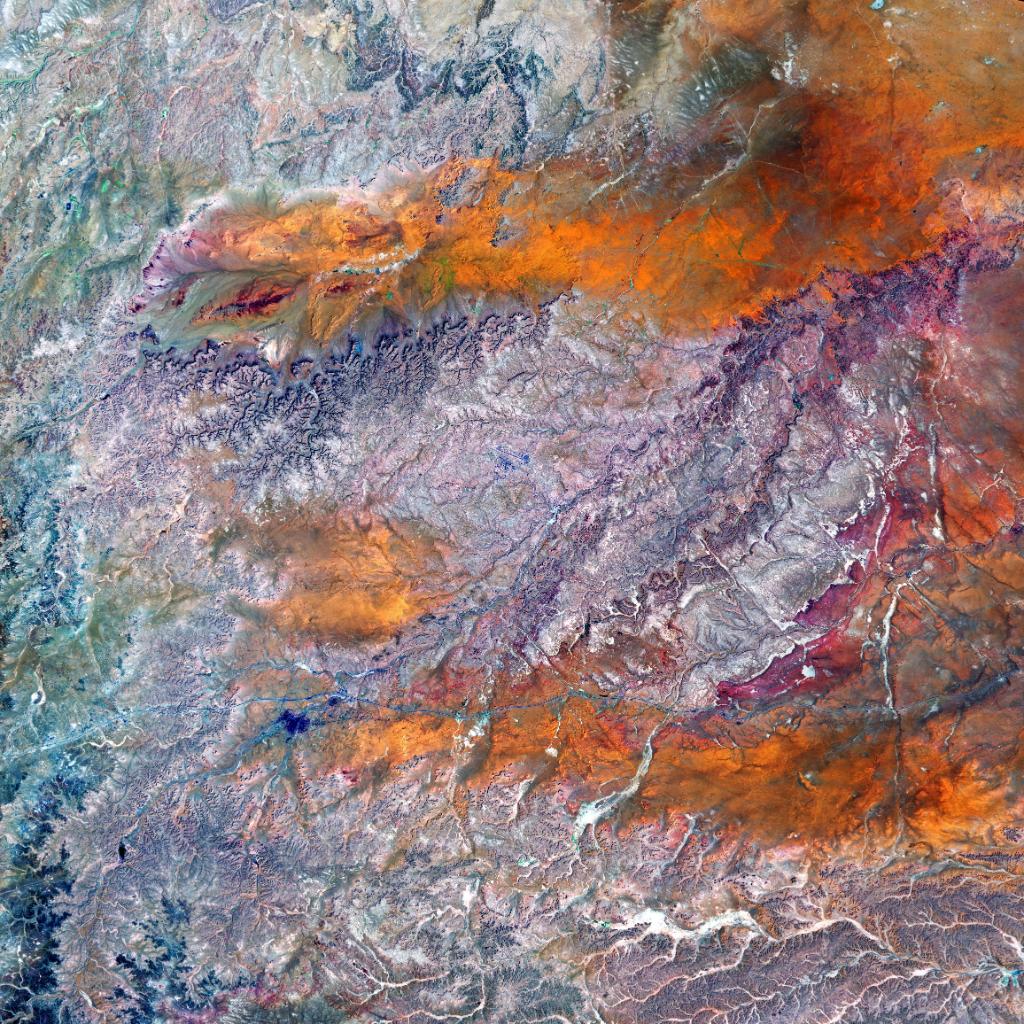
A stunning work of art or an image of our beautiful planet? The transformative power of water, wind & gravity is on full display in this satellite image of Iraq's Ga'ara Depression. Varied wavelengths identify rock + soil types & detect moisture


NASA notes:


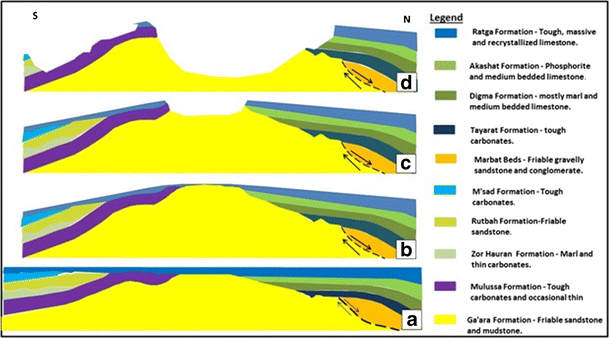
The transformative power of water, wind, and gravity is on full display in Iraq’s Ga’ara Depression. The rim of this large, oval-shaped basin near the Iraq-Syria border rises a few hundred meters along its southern and western edges.

Geologists call the rock at the bottom of the basin the Ga’ara Formation. It is made up of alternating layers of sandstone and soft claystone that formed roughly 300 million years ago, when the area was covered by a shallow sea. Later, types of carbonate rock (dolomite, limestone, and marl) were layered on top of the Ga’ara Formation, and the entire sequence of rock was gradually pushed up into a dome shape by tectonic forces.

The dome achieved its maximum height about 30 million years ago. Erosive forces have since chipped away at this layer-cake of rock. The combined effects of water, wind, and gravity wore through the thin carbonate layers at the top of the dome, and then hollowed out the oval-shaped depression from the soft, crumbly rock of the Ga’ara Formation, leaving behind a rim of tougher carbonates. These steep cliffs along the southern rim have played a key role in widening the basin over time. The regular stream of landslides and rockfalls that tumble down the cliffs have caused the southern rim to continue moving south over the years.


That's Iraq from space.  On the ground?  ALSUMARIA reports an armed attack just outside of Baghdad left three people injured today and, yesterday, security forces killed 7 suicide bombers in Anbar Province before the bombers could detonate, a Diyala sticking bombing left one person injured, and  Nineveh saw the rape of a young girl and the kidnapping of two people.  On yesterday's violence, Margaret Griffis (ANTIWAR.COM) counts "62 killed or found dead."

And to the realm of pimping war.  Tuesday, the United States Institute of Peace held three panels to push further war in Iraq and Syria.  The third panel was moderated by leaker Stephen Hadley and featured Special Envoy Brett McGurk, US Gen Joseph Vogel (CENTCOM commander) and US AID's Mark Green.

Let's note this segment and, as you read along, grasp the question asked and then Green's response which starts out on a different topic completely and then, mid-way, begins offering nonsense that is little more than definition and has nothing to do with any actual work being done.

Stephen Hadley: [. . .] one gentleman said to us, you know, we've won three wars in Iraq.  One against Saddam Hussein, one against al Qaeda and we're on the threshold of winning one against ISIS but we haven't had an enduring peace.  It was to emphasize -- as you [Mark Green] did and as Gen Votel did -- the importance of the stabilization piece.  Part of that, of course, a mission near and dear to the heart of USIP, is the reconciliation mission, bringing groups -- sectarian groups that are divided by grievances, by history, threats of retaliatory violence -- bringing them together both at the national level and the local level.  Can you talk about what-what the United States and its coalition allies are doing on the reconciliation front in terms of Iraq?


Mark Green: Uh, sure.  Uh, in Iraq, one thing we're doing is help to restore the cultural diversity that has been a hallmark of Iraq.  So in northern Iraq, uh, we're working, again, to help Yazidis and Christian minorities to be able to return home -- to feel secure enough to be able to return home and-and sort of re-establish their communities.  So that's one thing that we're doing in particular.  And, in fact, I know that USIP was at our broad agency co-creation conference when we were working with, uh, a wide range of-of civil society groups -- Iraqi, American, but also from other parts of the world to try to look at this element of, uh, of reconciliation.  On top of that, what we're also doing is strengthening civil society and working with civil society groups. So in addition to having responsive governments and capable governments -- and governments that are capable of delivering services in an equitable way so that groups aren't disenfranchised.  It's also important to strengthen the capability and the role of civil society so that the needs and desires of citizens can be organized and marshalled in their dealings with government.  So, uh, to have effective governance, you have to have an effective government that can deliver.  You also need the cultural ethic and, uh, and community constructs that allow those desires and needs to be organized and pushed forward to the government.  That's part of the work that we're doing there.


Reconciliation?

It refers to one of the benchmarks that was supposed to be tied to continued US financial and military support for Iraq near the end of Bully Boy Bush's second term.  No progress was ever made and soon it was forgotten.  But reconciliation refers to the Sunnis and the Shi'ites.  Specifically, it refers to overturning Paul Bremer's de-Ba'athification.  That policy stripped most Sunnis of the ability to serve in government.  That policy stripped them of many jobs.  It is thought by many -- including every -- that's every! -- witness who appeared before the UK's Iraq Inquiry -- civilian and military witness -- that Bremer's de-Ba'athification was a disaster which destroyed Iraq.

The benchmarks included reconciliation but nothing was done on it -- even to this day.

Another election will be held May 12th and yet again the Justice and Accountability Commission is screening candidates despite the fact that most people were shocked in 2010 that the commission was still around because it had outlived its mandate.

Asked about reconciliation, Mark Green offered nonsense about Christians and Yazidis.  Asked about reconciliation, Green spoke definitions of governance, he did not provide one single example of reconciliation and he knew that as he spoke, it was all over his face.  The others averted their eyes.

June 14, 2014, then-US President Barack Obama insisted that there needed to be a diplomatic push but, though he soon began bombing Iraq daily, there never was a diplomatic effort.  In the time Donald Trump's been president -- about 15 months -- there had been no real diplomatic effort.

Though reconciliation is the best thing for Iraq, it clearly is not the best thing for the occupation of Iraq.  A reconciled Iraq could work together and could expel the foreigners in Iraq including the US occupiers.  As the US government and the UK government have now spent years admitting that Iraq needs a national reconciliation process but have also spent years refusing to help facilitate that, it is very obvious that the governments do not want a reconciled Iraq -- an Iraq that might take charge of its own destiny.

We've previously noted the US Institute of Peace's Tuesday events in  Wednesday's "Iraq snapshot" and in yesterday's snapshot.

While we're noting Brett, let's offer a note to Gina Chon, Rukmini is the new Judith Miller, yes, but she's also got quite a relationship going with your husband.  Considering that you left your husband for Brett when you were both in Iraq and he left his wife for you, you might want to wall Rukmini off from your husband.


May 12th, Iraq is set to hold parliamentary elections and no one's been bothered by the fact that Ramadan takes place from May 15th to June 14th.   Past elections in Iraq have resulted in many delays -- in the case of the 2010 parliamentary elections, many months -- to settle.  If the post-election process goes even 1/4 as poorly as it did in 2010, Ramadan will only compound that.  Holding the election three days before Ramadan was very poor planning.

Hayder al-Abadi staked his future on the premature claim that he vanquished ISIS in Iraq.  That, of course, hasn't proven to be the case.   ISIS was supposed to be Hayder's big claim to fame.

Nouri al-Maliki was ousted by Barack Obama in 2014 because ISIS had seized Mosul and other spots.  Otherwise, the US would have kept installing Nouri every four years as Bully Boy Bush and Barack had already done.  It's that 'stability' that Cordesman is arguing for.  Forget that Nouri was running secret prisons and torture sites, forget that this had been exposed in the press, forget that he was disappearing people, forget that he was having the military use tanks to circle the homes of members of Parliament that he didn't like, none of that mattered.  Nor did his attacks on journalism and journalists.  His forces kidnapped reporters who covered the protests.  Even after both NPR and THE WASHINGTON POST reported that, Nouri was still given a pass by Barack.


Hayder hasn't been very effective eliminating corruption either.  MEM reported two weeks ago, "Iraqi Prime Minister Haidar Al-Abadi yesterday ordered an immediate investigation into allegations that fake jobs in the public sector were being offered to citizens by political parties in order to win votes in the country’s upcoming general elections."  ALSUMARIA reported today that the Badr Organization's Hadi al-Amiri stated they would eliminate corruption.  He stated that they would create needed jobs and punish those who had stolen Iraq's wealth.  Hadi is a militia thug and he's also one of the corrupt -- most infamously, he ordered a plane  to remain on the runway and wait for his spoiled son Mahdi to make the flight but the plane left Lebanon without Mahdi on board so al-Amiri, then-Minister of Transportation in Iraq, refused to allow the plane to land.  It caused quite an uproar -- as CNN noted in real time.


Geneiva Abdo (THE NATIONAL) offers:


As Iraqi Prime Minister Haider Al Abadi was deciding on coalition partners for his re-election this May, the two operatives in the room were Qassem Suleimani, the notorious commander of the powerful Iranian Revolutionary Guard Corps, and Hadi Al Ameri, one of the most important commanders of the Shia militias in Iraq under Mr Suleimani’s command.

Mr Suleimani pressured the Iraqi prime minister into partnering with Shia militia commanders such as Mr Al Ameri, whom Iran funds and controls. Mr Al Abadi, who is Shia, initially caved under pressure, but reversed his decision two days later and is now in a coalition that includes Sunni Muslim parties in an attempt to show cross-sectarian unity.

That meeting speaks volumes about the state of Iraq’s elections – the first since the defeat of ISIL last year – and the country’s political future. At first glance, Iran appears to still wield enormous influence over Iraqi politics. Indeed, Tehran has been entrenched militarily in Iraq since the United States-led invasion of the country in 2003. It also exercises considerable soft power, in the form of running religious schools and educational programmes. However, there are several changes in the political landscape that make it difficult for Iran to maintain the significant power it has built up. And the Iranian regime appears to be worried.

Other election issues?  Predicting the outcome:


MERI predictions/speculations on Iraq elections:
Total Shiite= 169 +/- 11
Total Kurds= 56 +/- 6
Abadi: 46
Hashd: 41
Maliki: 32
Sadir: 29
Hakim: 21
Allawi: 30
KDP: 25
Barham: 10
Gorran: 8
PUK: 7
Kurdistan Islamists: 6
Read full report & political map


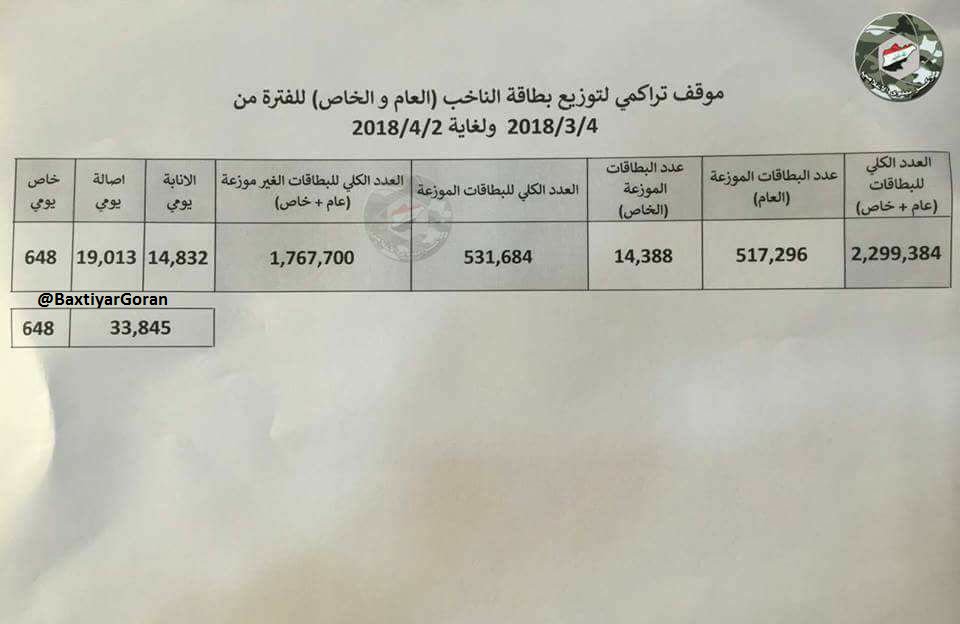
Voter cards need to be presented in order to vote and not everyone has received them.


1.7 million people in Nineveh Province have not yet received their electoral voter cards that allows them to vote in the upcoming Iraqi elections in May. So far 531,684 people got their voter cards.


Turning to other problematic areas in the US: Tammy Duckworth.  She's the manliest of the troops in Congress, or thinks she is.


I will not be lectured about what our military needs by a five-deferment draft-dodger.
—Sen. Tammy Duckworth (D, IL), an Iraq War veteran and Purple Heart recipient who lost both her legs in a combat mission


Yes, you will be lectured.   Donald Trump is the president of the United States.  The people and the system have spoken.  As the president, he is over the US military in his role of commander in chief.  You're insults towards him go far beyond disrespect and attest to your own ethical vacancy.  Your insults of people who got deferments go to the fact that you were not raised with manners.  Your parents failings reflect in your behavior.  You're a member of Congress, try conducting yourself as such.  It's raw meat for the knuckle draggers like Bill Morris, but for a lot of others, your insults have crossed a line and go to your own lack of manners and possible derangement.

Considering the lawsuit brought against you for attempting to gag whistle blowers at the VA -- a lawsuit that was settled out of court, not in your favor -- maybe you should learn to seek a lower profile.  It's not surprising that someone as disgusting and vile as you would try to hide abuse of veterans at the VA but it is surprising that after this was known you would still try to play Super Solider and Last Voice of Veterans.  Well, maybe not surprising.  Those raised without manners often were also raised without the ability to feel shame.

The following community sites -- plus PACIFICA EVENING NEWS and Jody Watley -- updated: