Wednesday, December 9, 2015

She cannot run from this lie

Hillary Clinton seems to think she can get away with lying.

Maybe because she has so often in the past?

THE BOSTON HERALD reports on one lie she is going to face push back on:

The heartbroken sister of fallen
 Benghazi hero Glen Doherty 
delivered her sharpest criticism yet of former U.S. Secretary of State Hillary Clinton yesterday, saying the presidential candidate “wasn’t truthful” about the 2012 terrorist attack.
“She knows that she knew what happened that day and she wasn’t truthful,” Kate Quigley said on Boston Herald Radio’s “Morning Meeting” show yesterday. “This is a woman that will do and say anything to get what she wants. I have very little respect for her. I know what she said to me and she can say all day long that she didn’t say it. That’s her cross to bear.”

Hillary Clinton is a liar and you better believe that if people are forced to choose between her and Kate Quigley, they will rush to choose Ms. Quigley.

This is C.I.'s "Iraq snapshot:"

 
Wednesday, December 9, 2015.  Chaos and violence continue, the US government continues dropping bombs on Iraq, Turkey refuses to leave Iraq, Ash Carter announces the White House is prepared to send US troops in attack helicopters to retake Ramadi, and much more.


Today, US Secretary of Defense Ash Carter informed the world that the White House was prepared to send US troops into battle in Iraq including with the use of helicopters.


Carter was appearing before the Senate Armed Services Committee along side the Vice Chair of the Joint Chiefs of Staff Gen Paul Selva.


Carter last appeared together before the House Armed Services Committee (at that hearing, he was testifying with the Chair of the Joint Chiefs of Staff Gen Joe Dunford).  It was at that hearing that Gen Ash Carter announced the change in policy:


Next, in full coordination with the government of Iraq, we're deploying a specialized, expeditionary targeting force to assist Iraqi and Kurdish Peshmerga forces and put even more pressure on ISIL.  These special operators will, over time, be able to conduct raids, free hostages, gather intelligence and capture ISIL leaders.   


We covered last week's hearing in the Tuesday December 1sts snapshot  and the Wednesday, December 3rd snapshot and in "Ash Carter spun wildly to Congress," additional reporting: Cedric's "Hank Johnson's sexual obsession with Barack" and Wally's "THIS JUST IN! HANK HIS JOHNSON!" covered US House Rep Hank Johnson wasting everyone's time to profess his strangely sexual obsession with Barack and Carter and Gen Joe Dunford refusing to indulge Johnson,  At Rebecca's site, Wally reported on Ranking Member Adam Smith  in "Even House Democrats are criticizing Saint Barack.(Wally)," at Trina's site Ava reported on the obsession with oil that was at the heart of the hearing in "It's still about the oil," Mike reported on US House Rep Niki Tsongas offering some realities about the so-called coalition in "US Armed Services Committee hearing offers a little bit of reality," Ruth reported on US House Rep John Kline's questioning which established that there was no cap on the number of US troops that could be in Iraq "Iraq still matters,"  Kat took on the surreal aspect with "The US just declared war on everyone but Santa," Elaine covered one time anti-war US House Rep Jackie Speier making an idiot of herself in statements and dress with "The idiot Jackie Speier" and Dona moderated a roundtable at Third on the hearing with "Congress and Iraq."


Today, Ash Carter announced US troops could help retake Ramadi with attack helicopters -- provided Iraq's Prime Minister Haider al-Abadi gave the go ahead.

In his opening remarks, Carter declared, "After a frustrating long time, we are starting to see some movement in the operation to recapture Ramadi."  The main reveal in that sentence would be "frustratingly long time."

And  "some movement"?  They've been in this battle since May.

At what point do they actually recapture Ramadi?


We'll note this from Carter:

Next, in full coordination with the government of Iraq, we’ re deploying a specialized expeditionary targeting force to assist the ISF and Kurdish Peshmerga forces and to put even more pressure on ISIL through a variety of raids and intelligence gathering . While this force will also be in a position to conduct unilateral operations in Syria, in Iraq the force will operate at the invitation of the Iraqi government and focus on defending its borders and building the ISF's ability to conduct similar operations. We will not be discussing specifics of this expeditionary targeting force or its operations in unclassified settings, both to protect our forces and preserve the element of surprise. We want this expeditionary targeting force to make ISIL and its leaders wonder when they go to bed at night, who's going to be coming in the window? Chairman Dunford and I recognize that in principle there are alternatives to the strategic approach we have adopted to drive ISIL from Syria n and Iraqi territory -- including the introduction of a significant foreign ground force, hypothetically international but including U.S. forces, even in the absence of capable, motivated, local ground forces. While we certainly have the capability to furnish a U.S. component to such a ground force, we have not recommended this course of action for several reasons: In the near -term, it would be a significant undertaking that, realistically, we would have to do largely by ourselves; and it would be ceding our comparative advantage of special forces, mobility, and firepower, instead fighting on the enemy's terms. In the medium- term, by seeming to Americanize the conflicts in Iraq and Syria, we could well turn those fighting ISIL or inclined to resist their rule into fighting us instead . As Chairman Dunford testified last week, ISIL "would love nothing more than a large presence of U.S. forces on the ground in Iraq and Syria, so that they could have a call to jihad." And lastly, in the longterm, there would still remain the problem of securing and governing the territory -- these must be done by local forces. So in the end, while we can enable them, we cannot substitute for them.


The above statements were touched on during a line of questioning.


Senator John McCain is the Chair of the Committee and Senator Jack Reed is the Ranking Member. Today, we're going to note McCain's line of questioning.  Next time we'll not Senator Bill Nelson.


Chair John McCain:  Mr. Secretary, on the first of December before the House Armed Services Committee, Congressman Forbes asked Gen Dunford,  


US House Rep randy Forbes:  Have we currently contained ISIL.

Gen Joe Dunford:  We have not -- We have not contained ISIL.


Chair John McCain:  Uh, Mr. Secretary, do you agree with Gen Dunford?


Secretary Ash Carter:  I, uh, agree with what Gen Dunford said, yes.


Chair John McCain:  So if we have not contained -- we have not contained ISIL, how are we to believe that we are succeeding against ISIL?

Secretary Ash Carter:  I, uh, think that, uhm, we are, uh, building momentum against ISIL.  I'm going to be very careful about describing the trajec -- I've described the trajectory of that success all around Iraq and Syria, some actions we're taking in Libya.  Uh, it's not my principal responsibility but I met yesterday with the Secretary of Homeland Security, the Director of the FBI, the Director of National Intelligence and other officials to talk about what we could do more of to -- uhm, uh-uh, strengthen the defense of the homeland as the Dept of Defense.  But in our principle responsibility which is to take the fight to Syria and Iraq, I've  described the actions that we've taken in just the -- 


Chair John McCain:  Thank you.

Secretary Ash Carter (Con't): -- and I think they are building momentum.

Chair John McCain:  Thank you.   How long do you think it will be before we retake Mosul or Raqqa?

Secretary Ash Carter:  Uh-uh, with respect to Mosul, Mr. Chairman, uh, it is hard to say because it depends -- that depends much on the progress of the Iraqi security forces which I described in building themselves into a more capable combat force.  With respect to Ramadi -- 

Chair John McCain:  Raqqa.

Secretary Ash Carter (Con't):  -- as I described --

Chair John McCain:  Raqqa

Secretary Ash Carter:  Oh-oh, Raqqa. Well, Raqqa?  There the, uh, problem -- and you noted this yourself, Mr. Chairman, uh, the, uh, Syrian Kurds to the north have done an excellent job of clearing their territory --

Chair John McCain:  We're not going to go into -- We're not going to go into Raqqa and you I know that.

Secretary Ash Carter:  They're not going to go to Raqqa, no, no -- 


Chair John McCain:  We haven't --

Secretary Ash Carter:  It would be -- It would be the Syrian -- it would be the Syrian Arabs.

Chair John McCain:  I guess the point here, Mr. Secretary, here we are with attacks on the homeland  of the United States of America, we have not contained ISIL and we have no timeline.  The timeline I was given when Senator [Lindsey] Graham and I went over there was at least the end of next year for Mosul and there is no plan, no strategy to retake Raqqa and I think it's pretty obvious to all that as long as they have the caliphate base then they are able to orchestrate  attacks such as they've successfully achieved in the last several weeks whether it be Ankara, Russian airliners, southern Beirut, Paris or San Bernardino. So here we are with a -- and you've described some measures that are probably very helpful but with no timeline with which to take out the caliphate from which there are many things happening including -- according to news reports -- developing chemical weapons. So -- and this is why I'm really puzzled.  This morning, by the way, on one of the news shows [MSNBC's MORNING JOE], former head of the United States Army, Chief of Staff of the United States Army, Gen Ray Odierno said we ought to have American contingent troops on the ground.  And I frankly do not understand the logic in your statement about "while you certainly have the capability to harness a US component in such a ground force, we do not recommend it because it would be a significant undertaking" -- I agree -- "we would have to do it largely by ourselves" -- I do not agree -- "it would be ceding our comparative advantage" -- we'd be -- "in the medium term it would seem to Americanize the conflict" -- Does somehow -- does anybody really believe that if the United States struck  back against the people that just slaughtered some Americans in San Bernardino that somehow that would encourage them?  What encourages them, Mr. Secretary, is success.  And they have a pretty serious record here of success just in the last couple of months just since you were here.  So I do not understand why in the world you wouldn't want Gen [Jack] Keane, the architect of the surge, the successful surge, and other military leaders including, this morning, former Chief of Staff of the Untied States Army, a small component of American forces with an international force which could be -- if the United States had the credibility -- could be gathered and then go in and take out this caliphate.  As long as the caliphate -- I know of no expert who doesn't believe that as long as this caliphate exists in Raqqa they're going to be able to orchestrate attacks and metastasize and maybe even move to Libya.  So maybe you can help the Committee out again that this would somehow cede a comparative advantage if we went in with a large Arab force, the Turks and Egyptians even other Sunni nations and go in there and take those people out?  There's 20 to 30,000 of them.  They're -- It's -- They are not giants.  So -- But -- Finally --

Secretary Ash Carter:  Yeah.

Chair John McCain:  --  someone's going to have to convince me that air power alone and Special Operation Forces are going to succeed in the short term in order to prevent other further things such as San Bernardino.  I'd love to hear your response.

Secretary Ash Carter:  Uh, a couple of things, Mr. Chairman.  First of all, to your main point about, uh-uhm, more American forces -- and I-I-I would say Special Forces but others as well that train, advise and accompany -- they're not Special Forces, we are doing --

Chair John McCain:  -- I was talking about a multi-national force.

Secretary Ash Carter:  There, Mr. Chairman, I-uh-uh, as I indicated, I too wish that particularly the Sunni Arab nations of the Gulf would do more.  And going way back --

Chair John McCain:  They are willing to do so --

Secretary Ash Carter (Con't):  -- to -- I've --

Chair John McCain (Con't):  -- if there's a large commitment.

Secretary Ash Cater (Con't):  -- I've had -- I've had lengthy conversations --

Chair John McCain:  And so have I.

Secretary Ash Carter (Con't):  -- with representatives there.  Well I-I-I-I have to say that, uhm, I have, uh, consistently emphasized to them that they have a unique role here and, uh, also so far as they're concerned about Iran which is another concern that they have -- by the way, that we have also -- a totally different but, uh, serious subject also.  Uh, that, uh, what I've emphasized to them is that we don't like it but the Iranians are in the game on the ground.  And I very much would like -- we would very much welcome -- we have repeatedly said this -- working with those countries on the ground because we believe as you noted that they, uh, would have a distinct advantage in a ground fight.  With respect to the Europeans, the Europeans have, generally speaking, uh, offered to do more within their capabilities and capacities.  I will note here -- and this is uneven across-across Europe -- but in general  I am quite concerned with the level of investment that Europe is making in its militaries and its alliance and partnership and, therefore, with the United States, there is much more that their economies would enable, uhm, them to do and that their history as-as-as standing up for the same kind of civilized values that we stand up with really require of them.  And so while we're getting more from the Europeans -- and I've indicated I'd like for more -- and I'd like there to still be more so in that sense I'm completely with you.  I-I-I simply on the basis of my urgent and consistent consultations with them unless, uh-uh-uh-uh-uh have less, uh, high hopes, uh, perhaps that you  would assemble such force.  We would certainly welcome that.  With that --

Chair John McCain:  Could I just also say that I urgently and fervently  ask you for a strategy that you can tell us when we're going to take Mosul, when we're going to take Raqqa and when we're going to wipe out this caliphate.  And, frankly, I have not seen that.  General, did you want to add anything? 

Gen Paul Selva:  Sir, I would add three points. First, I agree completely that defending the homeland is our top priority.  Second, taking the fight -- 

Chair John McCain:  That's helpful.

Gen Paul Selva (Con't):  -- taking the fight to the caliphate is what is going on today in Iraq and in Syria.  The combination of increasing the momentum with the movements in Iraq in Baiji as well as in Ramadi and partnering with --

Chair John McCain:   And, again, General there is no timeline for Mosul and Raqqa which is the basis of the caliphate. 

Gen Paul Selva:  Sir, the fight on the ground defines the progress we will make against the caliphate.  We have put significant pressure on northern Syria.  We have -- we have taken -- with Syrian Arab coalition partners -- have taken significant ground in the north and in the east of Syria.  They are using the equipment that we have provided  to put pressure on ISIL's main lines of communication between Raqqa and Mosul.  To provide a timeline would be to deny the fact that the enemy on the ground gets a vote but they do not have freedom of maneuver.  They do not have operational freedom of maneuver, they do not have tactical -- 

Chair John McCain:  General, they were just able to orchestrate an attack in San Bernardino, California.  My time is long ago expired. 


Barack Obama's decision to break his promise of no-boots-on-the-ground was raised in today's State Dept press briefing


 QUESTION: Would you agree that President Obama’s initial plan not to put U.S. boots on the ground to fight ISIL has changed?

MR KIRBY: I’m sorry, I did not hear the first part of your question.

QUESTION: Would you agree that President Obama’s initial plan not to put U.S. boots on the ground to fight ISIL has changed?

MR KIRBY: Would I agree that his original decision not to put U.S. boots on the ground to fight ISIL has changed?

QUESTION: That’s correct.


MR KIRBY: What’s happened is the – so first of all, let me back up. There’s – the President has been clear from the very beginning as Commander-in-Chief that we’re not going to fight a large, sustained combat counter-insurgency effort in Iraq or in Syria against ISIL. He never said there was never going to be U.S. boots on the ground. And a matter of fact, there’s more than 3,000 U.S. troops in Iraq right now in a training, advising, and assisting capacity. The additional Special Operations Forces that the Secretary of Defense has talked about and which Secretary Kerry fully supports, which will be operating – there’ll be a small expeditionary force that they’ve already – that the Defense Department has already talked about in Iraq, and then there will be some – there are some small number in Syria as we speak – are largely an extension of that same mission: train, advise, and assist.
Now, that said, the Defense Department – and I don’t want to speak to military matters too much, but the Defense Department has said that there will be a component of their job, these Special Operations Forces, that would include conducting raids and assisting indigenous partners in combat that they are conducting against ISIL. So it’s very much consistent with the original mission set given to U.S. troops that have been assisting indigenous partners against ISIL. But nothing has changed about the Commander-in-Chief’s very clear direction that this isn’t going to be a long, sustained U.S. ground operation or effort against ISIL.


QUESTION: Do you think that the 3,500 troops and more on their way is not a big ground operation? Do you --


MR KIRBY: It’s not when you consider the scale of the kind of force presence that we had in Iraq up until 2011 and what we had in Afghanistan – certainly nowhere near what we have in Afghanistan now, which is just under 10,000. So it’s not on that scale, and that’s the scale that we’re measuring it against.
Again, I really don’t want to talk about military matters, but nobody’s underestimating that 3,000 is still 3,000, and that U.S. troops are in – are doing important work against a very – assisting others against a very dangerous enemy. We’re all mindful of that. And not to mention that you have pilots and air crew that are also flying combat missions over Iraq and Syria. I think everybody understands that – the importance of that. But it’s nowhere near the scale in terms of the troops that we have seen in the last 14 years in both Iraq and Afghanistan. It’s much smaller than that, and I think it – as we used to say, it’s not just how many you have; it’s what they’re doing. And it’s very clear that the mission for our troops against ISIL is the same mission it’s always been, which is to help degrade and destroy this organization by helping build the capacity of indigenous partners on the ground, both Iraq – both in Iraq and in Syria. Okay?


QUESTION: But it’s also clear that those are boots on the ground, right, right now?


MR KIRBY: I’m not disputing that there are U.S. troops on the ground. But nobody ever said there – nobody said there wouldn’t ever be. What was made clear was that the mission wouldn’t be a large, sustained ground combat operation against ISIL, and we aren’t doing that. That is – nothing has changed about that, not one bit.


QUESTION: John, I just wanted to – if you could clarify the use of the term “expeditionary” force. It’s a mouthful. Can --


MR KIRBY: Expeditionary.

QUESTION: Expeditionary --

MR KIRBY: Just say it slow. It just rolls right off.

QUESTION: Is it – I mean I – “expeditionary.”

MR KIRBY: There you go.

QUESTION: Okay. So is it intended to expedite – I mean, is that – what is it going to do?

MR KIRBY: No, “expeditionary” --

QUESTION: I mean, as a military man, explain to us the difference --

MR KIRBY: “Expeditionary” means that the mission or that – and the units applied to a mission are being deployed someplace other than where they’re based for usually a limited amount of time and for a very discrete mission set.

QUESTION: So it is mobility, right?

MR KIRBY: It – part of being expeditionary is being agile, it’s being flexible, it’s being mobile. Absolutely, yeah.

QUESTION: Okay. So they could strike, let’s say, here one day, then move another 400 miles and strike?

MR KIRBY: Well, I mean, it’s about being mobile, yes. It is. But, I mean, I wouldn’t get into specific operational parameters.
Yeah.

QUESTION: And so how come this was never used before? This is the first time this phrase is being used --

QUESTION: Since the Spanish-American --

QUESTION: If all it means is that they’re being sent other than where they’re based, then presumably all troops that are sent elsewhere --

MR KIRBY: Well, you’d have to --

QUESTION: (Inaudible.) It’s been used for decades.

QUESTION: Really?

QUESTION: Yeah.

QUESTION: It was used by --

QUESTION: The Allied Expeditionary Force that went to – that fought in World War I. (Laughter.)

MR KIRBY: I don’t think I – I don’t think I need to be here anymore.

QUESTION: You’ve got to say – you’ve got to – (laughter) --

MR KIRBY: I defer to Arshad, who’s absolutely correct. (Laughter.) No, he’s right.

QUESTION: Someone with more knowledge --

MR KIRBY: It’s not a new phrase, it’s not a new term, and I would point you to the Defense Department for more details about that.


And there you see the useless State Dept press -- more focused on when the term "expeditionary" was last used or first used than on the broken promises of a sitting president.


They also aren't eager to question the State Dept or the Defense Dept -- let alone Barack himself -- on how the plan or 'plan' has been a failure.


Today, the Defense Dept announced:

Strikes in Iraq
Rocket artillery and fighter, bomber, attack, and remotely piloted aircraft conducted 22 strikes in Iraq, coordinated with and in support of the Iraqi government:
-- Near Huwayjah, a strike destroyed four ISIL bunkers and seven ISIL trenches.
-- Near Albu Hayat, a strike struck an ISIL tactical unit and destroyed two ISIL vehicles, two ISIL rockets, and an ISIL weapons cache.
-- Near Kirkuk, a strike struck an ISIL tactical unit, suppressed an ISIL mortar system, and destroyed an ISIL heavy machine gun and two ISIL fighting positions.
-- Near Kisik, a strike destroyed four ISIL rockets.
-- Near Mosul, two strikes struck an ISIL tactical unit and destroyed an ISIL vehicle.
-- Near Qayyarah, seven strikes struck an ISIL logistical facility, an ISIL training facility, an ISIL weapons cache, an ISIL weapons storage facility, two ISIL staging areas, and an ISIL tactical unit, and destroyed an ISIL bunker.
-- Near Ramadi, four strikes struck three separate large ISIL tactical units, denied ISIL access to terrain, and destroyed three ISIL bed down locations, two ISIL light machine guns, two ISIL heavy machine guns, an ISIL recoilless rifle, four ISIL fighting positions, an ISIL tactical vehicle, three ISIL buildings, four ISIL vehicle bombs, an ISIL vehicle bomb making factory, an ISIL staging area, an ISIL compound, an ISIL resupply location, and two ISIL command and control nodes.
-- Near Sinjar, three strikes struck two separate ISIL tactical units, immobilized an ISIL vehicle, and destroyed three ISIL fighting positions and an ISIL heavy machine gun.
-- Near Baghdadi, a strike struck an ISIL tactical unit and destroyed an ISIL building.
-- Near Fallujah, a strike destroyed an ISIL homemade explosives cache, an ISIL bed down location and an ISIL vehicle bomb making factory.


Task force officials define a strike as one or more kinetic events that occur in roughly the same geographic location to produce a single, sometimes cumulative, effect. Therefore, officials explained, a single aircraft delivering a single weapon against a lone ISIL vehicle is one strike, but so is multiple aircraft delivering dozens of weapons against buildings, vehicles and weapon systems in a compound, for example, having the cumulative effect of making those targets harder or impossible for ISIL to use. Accordingly, officials said, they do not report the number or type of aircraft employed in a strike, the number of munitions dropped in each strike, or the number of individual munition impact points against a target.


Chair John McCain:  In response, Mr. Secretary, in response to your last two points?  One, on the funding, we just received that request last week but you know very well that's the result of the absolute failure of the expenditure of what was judged then to be $43 million and for or five people were trained  We don't want to approve of something like that again.  We want to -- We want to -- If you want that kind of money to train and equip, we want to know what the plan is.  And we don't want to see a repetition of testimony by the head of Central Command who said, "Well we have four or five less and we've spent $43 million."  We have an obligation to the taxpayers

Turning to the continued Turkish invasion of Iraq, Sunday, Iraqi Prime Minister Haider al-Abadi gave Turkey 48 hours to remove their troops from Mosul.  Yesterday saw Turkey's response: We'll stop sending troops into Iraq . . . but we're leaving those already in Mosul.

In someone's mind, that was an 'answer.'

The same way, when Iraqi officials -- including Haider -- denounced Turkey's bombing of northern Iraq and Turkey -- with the backing of the US government -- blew off the concerns and continues to bomb northern Iraq.


Yesterday, Russia -- which has its own tensions with Turkey -- took the matter to the United Nations Security Council.  Edith M. Lederer (AP) reports that Vitaly Churkin, Russia's Ambassador to the United Nations, states he declared Turkey was conducting itself "recklessly and inexplicably" and that they were acting without legal backing.

Though Hadier had insisted he would take the matter to the United Nations, he did not do so.

In  a chance to play catch up -- and also an effort to practice some face saving -- he's made a move.  Tulay Karadeniz and Ercan Gurses (REUTERS) report that he issued a statement (whine?) insisting, "NATO must use its authority to urge Turkey to withdraw immediately from Iraqi territory."  RUDAW adds:


NATO Secretary-General Jens Stoltenberg vowed Tuesday  to preserve the integrity and sovereignty of Iraq, after Iraqi Prime Minister Haider al-Abadi called on the organization to use its authority to force a withdrawal of Turkish forces from Iraq.


At THE NEW YORKER, Dexter Filkins weighs in noting:


The Turkish move into Iraq is the latest in a series of geopolitical flailings by the blustering and impulsive Turkish President, Recep Tayyip Erdoğan. Most of them are related to the civil war in Syria. Since 2011, when the Syrian uprising began, Erdoğan has sought to gain some kind of advantage there, or at least to feel sure that he is backing the right horse. And he’s failed miserably. As much as any other leader in the region, Erdoğan has pushed vigorously for the removal of Syrian President Bashar al-Assad. To see this through, the Turkish government has backed the most extreme rebel groups, including ISIS, allowing and even helping foreign fighters to come into Turkey and cross into Syria. ISIS would never have metastasized as virulently as it has without Turkey’s assistance.




Tuesday, December 8, 2015

Another lie exposed

I hope you read Wally and Cedric's joint post:


They are highlighting -- in their usual humorous manner -- another lie revealed in the Benghazi scandal.


Adam Kredo (FREE BEACON) reports:


Newly released emails show that a senior Defense Department official offered the State Department “forces that could move to Benghazi” immediately during the deadly 2012 attack there on the American consulate.
Jeremy Bash, the former Pentagon chief of staff, offered to provide forces at 7:19 p.m. on the evening of the attack, “only hours after they had begun,” according to Judicial Watch, which disclosed the email on Tuesday.
“We have identified the forces that could move to Benghazi. They are spinning up as we speak,” Bash wrote.
Portions of the email remain redacted by the Obama administration.
“The Obama administration redacted the details of the military forces available, oddly citing a Freedom of Information Act (FOIA) exemption that allows the withholding of ‘deliberative process’ information,” according to Judicial Watch.


If you have followed the story, and I have, you know that the White House -- and Hillary Clinton -- repeatedly insists that there were no troops available and none that could get there in time.

This is the September 11, 2012 attacks that killed Sean Smith, Tyrone Woods, Glen Doherty and U.S. Ambassador Chris Stevens.


This is C.I.'s "Iraq snapshot:"

 
Tuesday, December 8, 2015.  Chaos and violence continue, more bombs are dropped on Iraq (with no measurable effect), Turkey and Iraq continue to argue over Turkish troops in Iraq, Haider al-Abadi's position remains precarious, and much more.


Turkey has halted its deployment of troops to Iraq, AUSTRALIA ASSOCIATED PRESS reports.  But before you breathe a sigh of relief, Turkey's Minister of Foreign Affairs, Mevlut Cavusoglu, states that the troops already in Iraq will not be withdrawn.

What's going on?

Iraq's Prime Minister Haider al-Abadi, on Sunday, gave Turkey 48 hours to remove troops from Mosul. That ticking alarm clock is about to buzz.  So where do things stand?  SPUTNIK reports:

Turkish troops remain in Iraq despite a partial withdrawal, Iraq's Defense Ministry spokesman Nuseir Nouri told Sputnik Arabic.
In a convoluted statement, the spokesman first denied that Turkish troops were present in Iraq, then saying that there are troops protecting the camps training Masoud Barzani-linked fighters. On Friday, up to 150 Turkish military personnel had been deployed in northern Iraq's Nineveh province allegedly to provide training to the fighters.


Iraq's quickly become The Land of the Non-Withdrawal.  US troops are still there.  Now Turkish ones as well.


This has not set well with Iraqis and a demonstration took place today.  Seamus Kearney (EuroNews) reports, "Hundreds of protesters have gathered outside the Turkish embassy in Baghdad, demanding the withdrawal of Turkish troops from the north of the country."


It's hard to see how this non-withdrawal is going to please protesters.


And let's remember, this is Iraq and Turkey.

Iraqis were already outraged about Turkish war planes bombing northern Iraq.  Haider al-Abadi had called for that to end but the US government wanted it to continue.

Who won that battle?

The US government.

Leaving Haider humiliated.


Humiliation which may have egged on former prime minister Nouri al-Maliki who continues to be the subject of press and social media whispers -- specifically that he's planning an attempted coup that will restore him as prime minister.


He was a hideous prime minister.  That's not an endorsement of Haider al-Abadi.

Like Nouri, he's seen as a puppet of Iran.  (In truth, both men are as indebted and indentured to the United States government as they are to Iran.)


Tareq al-Hashemi, former two-term vice president of Iraq, has a column at MIDDLE EAST MONITOR on Iran and a recent event where Iranians stormed an Iraqi border -- an event that Tareq notes Iran would never have allowed to take place there and one that many suspect was a planned event on the part of the Iranian government:


The position of Al-Abadi’s government, which only made a useless statement, is one of collusion. If the government wanted to, it could have taken pre-emptive or subsequent measures to reinforce the border crossing with enough military forces that are capable of deterring the storming of the border when it noticed these suspicious gatherings. There is no doubt that the government monitors the growth of the gatherings over the past few days. The government also could have, at a later time, worked on containing them and forcing them to return, but it did not do so. 
We did, however, see the government use excessive force against the Iraqis displaced from Anbar. Didn’t the government hold up thousands of Iraqis and refuses, until this day, to allow them to enter the country through the Bazibir Bridge, west of Baghdad, even those who are sick, elderly, disabled, women and children? Didn’t the government deprive hundreds of thousands of displaced families from their right to return to their municipalities and areas of residence after they were liberated from [the Islamic State]’s control?


As most reading Tareq's column will grasp, those from Anbar were predominately Sunni.

That has always been the complaint against the central-Baghdad government when Nouri was in charge and remains the complaint to this day with Haider in charge:  The government persecutes Sunnis while protecting Shi'ites.


That's why the Islamic State got its foothold in Iraq to begin with.

It's also one of the continuing threats to the stability of Haider al-Abadi's government.


On the precarious Haider, Ramzy Mardini (WORLD POLITICS REVIEW) explains:

In early November, Abadi's efforts to implement a reform agenda that intended to tackle a corrupt and dysfunctional political system were decisively defeated in a unanimous vote in Parliament.  From then on, his reform initiatives, which were announced in the summer of 2015 in response to mass demonstrations in Baghdad and southern Iraq, will require Parliament's approval.  This limits any unilateral power the prime minister has to shape Iraq going forward.  Opposition to his proposed reforms exposed his vulnerability, which is now visible not only to the public but also to his political rivals.  Indeed, despite waging a war focused on reclaiming lost territory on Iraq's periphery, Baghdad is now preoccupied with a dangerous power struggle within the political establishment that Iran had worked for years to cultivate.
For Abadi, it is not the military threat posed by the Islamic State, per se, that looms over his premiership.  Instead, the real threat to his leadership, and perhpas to US interests to maintain an allied government in Baghdad, is an intra-Shi'ite contest for political authority.  This competition is occurring within a fragment government led by a prime minister who depends for his political survival on the very same forces threatening that survival.  Indeed, former Prime Minister Nouri al-Maliki whose autocratic and sectarian leadership the West blames for Iraq's ills, has leveraged his prior relationships with pro-Iran Shi'ite militias and managed to make a potential comeback to threaten his successor.  Abadi also faces challenges to his authority from other Shi'ite figures aligned with Iran, who, at best, effectively limit his power, and, at worst, could attempt to unseat him.


Back to the issue of Turkey, Chas Freeman was the US Ambassador to Saudi Arabia from 1989 to 1992.  Sputnik interviewed him about this latest crisis and he states, "The basic principles of international law are no longer respected in the Middle East.  This Turkish intervention reflects the breakdown of sovereignty and territorial integrity in the Levant catalyzed by the American invasion of Iraq, which was itself unauthorized under international law."


Monday,  ARUTZ SHEVA reported that Iraq's prime minister Haider al-Abadi has declared he will appeal the issue to the United Nations Security Council if Turkish troops are not removed.


Too late for him with Russia beating him to the punch in calling for a discussion. Eyewitness News notes, "The discussion was expected to follow a closed-door meeting of the 15-nation council on unrelated issues."

AFP reminds:

Relations between Moscow and Ankara have been tense since Turkish fighter jets shot down a Russian fighter jet on the Syrian border on November 24.
Since then, Russia has imposed sanctions on Turkey, including a ban on the import of some Turkish foods and a halt on sales of Turkish holiday travel packages -- a major blow to the tourist industry. 


The issue was touched on briefly at today's US State Dept press briefing moderated by spokesperson John Kirby.


QUESTION: John, on this, on Turkey-Iraq. Turkish foreign minister has said today that Turkey won’t send more troops to Iraq, but at the same time, they won’t withdraw the troops that they have in Iraq. Do you have anything on this?


MR KIRBY: Well, I’ve seen those reports, Michel. Again, as I said yesterday, this is an issue for Turkey and Iraq to continue to work out. We’re encouraged by the fact that their defense ministers have spoken. We want to see that dialogue continue. This is an issue that both of them, we believe, need to continue to discuss, work out.


QUESTION: And how do you view that Russia called the UN Security Council to discuss this issue?


MR KIRBY: I’m sorry?


QUESTION: That Russia has called the UN Security Council to discuss the Turkish --


MR KIRBY: We continue to believe that the best path forward here is for Turkey and Iraq to work this out bilaterally and to have discussions. And they have, and we’re encouraged by that. And as I said yesterday, we believe that this can and should be – and there should be no reason why it couldn’t be – resolved peacefully through dialogue and discussion. As I also said, we want – it’s important and I want to restate this as a sound principle, because it’s a principle that needs to be continually hit home. Iraq’s a sovereign country; and we want all efforts against ISIL inside Iraq to be done with the cooperation, in consultation with the Iraqi Government and with their full permission. That’s an important fundamental principle here to respect the sovereignty of Iraq and that won’t change going forward. But we believe that this is best resolved between Turkey and Iraq.


QUESTION: Do you mean that you don’t support discussing this issue and the --


MR KIRBY: No, what I said was, rather than tell you what we don’t support, let me tell you what we do support, and that is that we support Turkey and Iraq continuing to have a dialogue and working their way through this.


What they do support?

They supported Turkey.

The White House supported the bombs Turkey has dropped on northern Iraq and defended Turkey doing so -- all the while Haider and other government officials in Iraq objected.  The White House has backed Turkey's military infusion/invasion of Iraq as well.


What they won't back is anything that addresses the actual problems in Iraq.


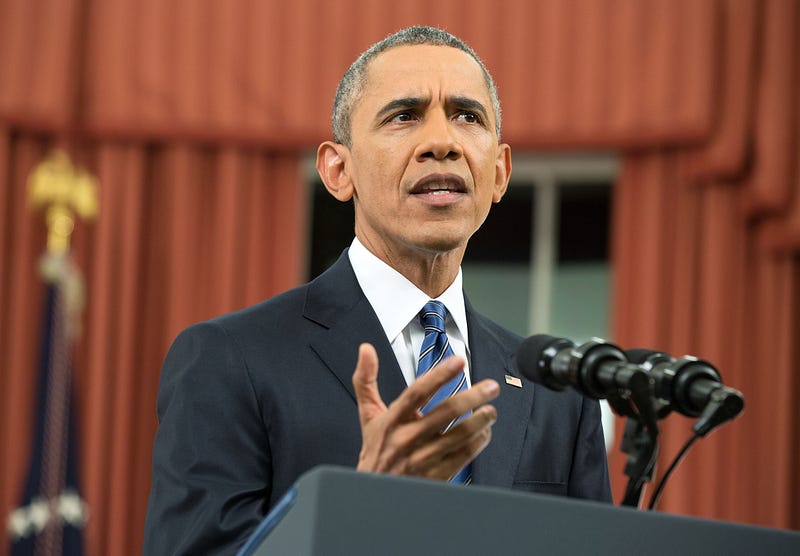
Sunday night, US President Barack Obama gave his third speech from the Oval Office since being sworn in back in January of 2009 ("Watch the full video and read the President’s remarks:").


What did he say?

Nothing of any value.

A lot to scare any actually paying attention.


For example, let's note these bullet points the White House prepared.


President Obama's ISIL strategy abroad


That's how you defeat the Islamic State?

Only if you're an idiot.


Barack's a failure.

He's a failure because he can't speak the truth, he's a failure because he can't speak up, he's a failure because he wanted the title of president but didn't want to do the work.

Over a year ago, June 19, 2014, Barack told the world a political solution was needed.


Now he's too chicken to even note that reality.

So he offers a lot of b.s. that's supposed to make him look tough but only makes him look pathetic.

The only way you defeat the Islamic State is by robbing it of is very reason for existence -- the persecution of the Sunnis.


Quentin Sommerville (NEW STATESMAN) explains:


As Britain makes a decision on whether to bomb IS in Syria, as we are already doing in Iraq, we appear to have little understanding of why IS has become so strong and, indeed, why its support is growing. In our disgust at its medieval methods of torture and killing, it is easy to forget that IS is not merely tolerated but welcomed in its strongholds in Iraq and Syria. It is true that there are many foreign fighters in both cities but there are also Sunni Arab populations that regard IS rule as a better alternative to the Shia-led government of Iraq, Iranian-funded militias, the Kurds or the regime of Syria’s president, Bashar al-Assad.


The point is one Barack grasps verbally but one he fails to provide action for.  Instead of providing a diplomatic infusion, bringing all the agents to the table and hashing things out, he prefers to drop bombs and send in troops.

None of which will erase the Islamic State or what pops up to replace the Islamic State -- which popped up to replace al Qaeda in Mesopotamia.


Today the US Defense Dept announced:

Strikes in Iraq
Fighter, bomber, and remotely piloted aircraft conducted 20 strikes in Iraq, coordinated with and in support of the Iraqi government:

-- Near Huwayjah, four strikes struck three separate ISIL tactical units, wounded two ISIL fighters, damaged an ISIL trench, and destroyed an ISIL vehicle and an ISIL tunnel.

-- Near Kisik, three strikes struck three separate ISIL tactical units and destroyed three ISIL fighting positions and an ISIL rocket cache.

-- Near Mosul, a strike destroyed an ISIL excavator.

-- Near Ramadi, six strikes struck two separate ISIL tactical units, denied ISIL access to terrain, and destroyed three ISIL ammo caches, 12 ISIL buildings, an ISIL command and control node, an ISIL sniper position, seven ISIL heavy machine guns, four ISIL staging areas, an ISIL mortar system, an ISIL tactical vehicle, an ISIL tunnel entrance, seven ISIL fighting positions, and two ISIL supply caches.

-- Near Sinjar, a strike destroyed an ISIL vehicle.

-- Near Tal Afar, two strikes destroyed three ISIL weapons caches, nine ISIL bunkers, three ISIL tunnels, and an ISIL vehicle.

-- Near Hit, a strike destroyed an ISIL homemade explosives facility and two ISIL vehicle bombs.

-- Near Qayyarah, two strikes destroyed an ISIL logistics facility and an ISIL vehicle bomb-making facility.


Task force officials define a strike as one or more kinetic events that occur in roughly the same geographic location to produce a single, sometimes cumulative, effect. Therefore, officials explained, a single aircraft delivering a single weapon against a lone ISIL vehicle is one strike, but so is multiple aircraft delivering dozens of weapons against buildings, vehicles and weapon systems in a compound, for example, having the cumulative effect of making those targets harder or impossible for ISIL to use. Accordingly, officials said, they do not report the number or type of aircraft employed in a strike, the number of munitions dropped in each strike, or the number of individual munition impact points against a target.


These bombs have been dropped on Iraq since Augut 2014 by US war planes.

They've had no real effect other than terrorizing the Iraqi people and putting US tax payers further in debt for financial cost of a never-ending war.


Quentin Sommerville concludes his essay on the Islamic State with this, "The grievances in Iraq and Syria that allowed it to flourish have not been addressed and have only intensified – and appear to lie far beyond the reach of air strikes alone."


Exactly.


The following community sites updated tonight:


  • Hillary's biggest supporter is Donald

    Is Donald Trump trying to get Hillary Clinton elected president?

    Every time he opens his mouth with a statement even more outrageous than the last, it feels like the whole thing has to be a put on and Mr. Trump is secretly trying to elect Ms. Clinton.

    Like myself, in 2008, Mr. Trump supported then-Senator Clinton's bid for the Democratic Party's presidential nomination.

    So it is plausable that his crazy is somehow coordinated.

    But that gives him credit for much more thought than I think he is capable of.

    What do you think?


    This is C.I.'s "Iraq snapshot" for Saturday: 

     
    Saturday, December 5, 2015.  Chaos and violence continue, Turkey invades Iraq (but says it's there to help), the US government continues to 'help' by bombing Iraq, public radio has a serious discussion about these efforts, Sunnis continue to be persecuted, and much more.


    Today, the US Defense Dept announced:

    Strikes in Iraq
    Bomber, fighter, ground attack and remotely piloted aircraft conducted 12 strikes in Iraq, coordinated with and in support of Iraq’s government:

    -- Near Habbaniyah, one strike suppressed an ISIL tactical unit.

    -- Near Kisik, one strike struck an ISIL tactical unit.

    -- Near Mosul, two strikes struck two separate ISIL tactical units and destroyed an ISIL heavy machine gun and two ISIL fighting positions.

    -- Near Ramadi, seven strikes struck five separate ISIL tactical units and destroyed an ISIL heavy machine gun, an ISIL bunker, two ISIL vehicle bombs, 15 ISIL fighting positions, 12 ISIL buildings, three ISIL light machine guns, three ISIL rocket-propelled grenades, an ISIL anti-air artillery piece, an ISIL assembly area, five ISIL staging areas, an ISIL weapons cache, and denied ISIL access to terrain.

    -- Near Sinjar, one strike destroyed an ISIL vehicle bomb and an ISIL fighting position.


    Task force officials define a strike as one or more kinetic events that occur in roughly the same geographic location to produce a single, sometimes cumulative, effect. Therefore, officials explained, a single aircraft delivering a single weapon against a lone ISIL vehicle is one strike, but so is multiple aircraft delivering dozens of weapons against buildings, vehicles and weapon systems in a compound, for example, having the cumulative effect of making those targets harder or impossible for ISIL to use. Accordingly, officials said, they do not report the number or type of aircraft employed in a strike, the number of munitions dropped in each strike, or the number of individual munition impact points against a target.


    US President Barack Obama began these bombings in August of 2014.  Fifteen months later and there's no progress.

    Imagine that, bombs don't stop violence.


    Let's drop in on THE DIANE REHM SHOW's first hour (international roundtable) from Friday:


    Diane Rehm:  Indeed we had this e-mail from Marsha in Indianapolis, "Please discuss how our bombing in Syria and Iraq is contributing to radicalization, especially in our country."

    Jonathan Tepperman:  This is something that the Obama administration is very concerned about and is one of the reason that the US effort has been -- the bombing effort has been much less effective than it could have been precisely because ISIS is no dummy -- are no dummies.  They know that if they position their forces within urband centers, which they do, it makes it much harder for us to attack them without causing massive civilian casualties, which is what has been happening.


    And later, Nancy Youssef observed, "Lander is I think really getting at, you know, we hear from the U.S. and European officials all the time that there's no military solution to defeating ISIS, that it has to be a political defeat, and yet the primary approach is a military one, and that in tackling al-Qaeda with a military approach, it led to a something more grotesque ISIS. And this fear that with every sort of military campaign, rather than eliminating an idea, which of course Obama cannot, it is just fueling the next iteration of terror groups."


    All these months later,  Barack is 'fine tuning' his plan or 'plan.'


    Which, of course, means more military, not more diplomacy.


    At Tuesday's US House Armed Services Committee hearing, Secretary of Defense Ash Carter declared:


     Next, in full coordination with the government of Iraq, we're deploying a specialized, expeditionary targeting force to assist Iraqi and Kurdish Peshmerga forces and put even more pressure on ISIL.  These special operators will, over time, be able to conduct raids, free hostages, gather intelligence and capture ISIL leaders.   


    With all the hours and hours of Pacifica Radio -- all the time they use of the public airwaves, only SOJOURNER TRUTH WITH MARGARET PRESCOD devoted a segment to it -- we noted this in Thursday's snapshot (the Tuesday broadcast) and that Friday's show would also feature the topic.

    Friday, Margaret Prescod was joined for her news roundtable by University of Houston's Dr. Gerald Horne, activist and politician Jackie Goldberg and Tom Hayden.


    At the top of the show, Margaret Prescod observed, "The US is increasing special operations forces on the ground in Iraq which would also be that would also be involved in raids in Syria."


    Tom Hayden shared his belief that 2016 would result in a war president -- and said that would be true if it was Senator Marc Rubio or Senator Bernie Sanders or former Secretary of State Hillary Clinton.

    We'll note this section of the exchange.


    Jackie Goldberg:  I think at some point or another, we have to see the situation in the Middle East as a battle between Sunni and Shia, not our battle, not the United States' battle.  And we should be working very hard, I believe, to get the nations of the Middle East who have a stake in this -- Saudi Arabia, the United Arab Republic, Turkey, Egypt, Sudan, Pakistan, Iraq -- all of them -- all of them, Iran, they all have -- Hezbollah -- they all have a stake in the outcome of this.  And in my view, I think we should be backing away from the war that Tom was talking about rather than continuing it and, instead, pushing very hard internationally to say to the folks that are involved in this that this is a struggle that you have over territory.  It's not too different from the Christians and the Muslims and the Crusades.  This is between two versions of-of Islam but they are mostly about the issues of power and control of resources and control of oil and control of government.  And those are issues that, in my opinion, should be settled amongst themselves.  If the United States does not wish to continue to be attacked, it has to look at its own policies.  It has to look at why - why would we be seen as an enemy of one side or the other?  And that is because we arm everybody, we make it possible for these wars to go on by selling arms to everybody.  And who we don't sell arms to, the Russians sell arms to.  So, at some point or another, if there is no possibility that those who are arming all of the sides don't disengage from the possibility of arming all the sides, I don't see an end to this.  And I don't see a role for the United States, to be very honest.  I know I'm probably very unique in all of this, but I don't think our role is to be there.   This is a fight -- it's an age old fight.  It's not new, it's thousands of years old and it is not, in my opinion, a fight that we should be taking on.


    Margaret Prescod:  Yeah.  And, Jackie Goldberg, I think there are quite a lot of people that will agree with you.  I mean, there was a contentious debate that happened in the British Parliament just a couple of days ago on a vote on the UK joining the bombing of ISIS.  And Jeremy Corbyn, who is the new leader of the Labour Party, put himself out there and totally opposed the bombing.  A number of the more mainstream members of the Labour Party rebelled against Corbyn and went along with Cameron -- the Conservative, Tory government.  So now the UK has in fact already be bombing and Germany is apparently now in on the act, you know, France has been in it for a very long time. There has been a very strong moment, Jackie, in the UK 

    Jackie Goldberg:  Oh, yeah.

    Margaret Prescod (Con't):  -- opposed to this bombing.

    Jackie Goldberg:  Oh, yeah.  And there's a peace movement in the United States opposed to our continued involvement with drones and strikings and all of this.  You know, if you are a young man living in San Bernardino and you are Pakistani and you see the United States continuously using drones on somebody who is "a target" but also other folks who get caught up in this -- civilians who had no role in this -- you begin to, you know, think, 'Well if civilians there are going to be targeted, then civilians here ought to be targeted.'  That's how you get to where we are in the United States today -- our policy has to change and if it doesn't change, well the war will come home.

    Margaret Prescod:  Yeah.

    Jackie Goldberg:  And it has.

    Margaret Prescod:  Yeah.

    Jackie Goldberg:  And it will continue to come home. 

    Margaret Prescod:  Right and we are going to be talking, a little later on, after our station break, about that San Bernardino shooting and the various implications.  What I would like to do now -- because I am assured that the sound is back -- and I'd really like to play this clip, it is from a PBS NEWSHOUR, Dr. Horn, before we go to you.  And it gives some reaction to the reality of the US increasing special operations on the ground in Iraq and also some more about what is happening in the region, reaction to that.  Let's go to that clip now.

    Gwen Ifill: Many Iraqis -- led by Prime Minister Haider al-Abadi didn’t appear to welcome the news that U.S. is sending additional special ops forces in an effort to root out ISIS strongholds.

    Salah al-Rikabi, Baghdad resident (through interpreter): We do not need any foreign forces, whether they are American, Danish, Italian or French ones. The Iraqi people are capable.

    Fadhil Abu Firas, Baghdad resident (through interpreter): U.S. forces have no credibility and no good intentions. I consider this a new invasion.


    Gwen Ifill: At NATO headquarters in Brussels, Secretary of State John Kerry denied that Iraqi leaders were not briefed about the new force in advance.


    John Kerry, U.S. Secretary of State: We will continue to work very, very closely with our Iraqi partners on exactly who would be deployed, where they would be deployed, what kinds of missions people would undertake, how they would support Iraqi efforts to degrade and destroy ISIL.


    Gwen Ifill: In London, British Prime Minister David Cameron made his final appeal in Parliament to expand the current British air campaign in Iraq to Syria.

    [. . . edit from PBS broadcast made by Prescod's show]

    Gwen Ifill:  Separately, Russia released satellite imagery purporting to show trucks delivering Islamic State oil in Turkey and accused Turkish leaders of profiting from the illicit trade. Turkish President Recep Tayyip Erdogan dismissed the claims as slander.
    Later in the day, an Islamic State video appeared to show the beheading of another hostage. The militants said he had spied for Russia in Syria and Iraq.


    Margaret Prescod: Alright, so there you go, Dr. Horn. I mean apparently these new forces, at least the some that we heard in that clip, not welcome.  We heard from people in Iraq and, of course, there's the growing mentions over the shoot downs by Turkey of the Russian military jet.  And everybody pretty much knows that Turkey wouldn't have shot down the Russian military jet without a heads up from the United States -- even though there's that and on the other hand analysts are saying, 'Well the Obama administration really doesn't want to ramp it up any further -- from where I sit, it seems, "Okay, go ahead and do the shoot down but then let's try to dampen it down."  Dr. Horn, give us your view on what's happening in all of that.

    Dr. Gerald Horne: Well during the war in Vietnam, there was a very useful debate as to whether or not that war was a blunder by Washington or whether it flowed illogically from US imperialism. And I think we need to have a sort of similar debate today. Particularly in light of the fact that the NEW YORK TIMES reported just a few days ago that Sirte which under Col [Muammar] Gaddafi [the late leader of Libya] was slated to be the capital of the African Union is now the capital of ISIS in Africa. And we need to ask some very difficult questions as to whether or not this is just another blunder by Washington or whether this flows illogically from a certain assumption and a certain kind of logic, particularly given that Barack Obama was elected in 2008 on the premise that he would not allow another type of an Iraqi fiasco to take place and yet he's presided over a similar fiasco in Libya, in north Africa, which has given a shot in the arm to ISIS.  I think we need to recognize that it's very difficult for the United States, which is now in relative decline, to buck it's so-called allies, particularly Saudi Arabia which it is dependent upon both for oil and capital flows.  And Saudi nationals, as we know, are major supporters of ISIS and, somewhat oddly, it's difficult for it to buck Turkey which, as you know, is in bed with ISIS as we speak. I think we should also recognize that with the close relationship with Israel, it's very hard for the United States to align with Iran against ISIS.  And we also know that with this anti Moscow sentiment in Washington -- which is a hangover from the Cold War period -- and it is difficult to engage in what President Putin has called for -- which is a United Nations international alliance against ISIS.  In fact, we know that just a few days ago the United States helped to twist the arm of Montenegro and entice it to enter the anti-Moscow alliance that is a North Atlantic Treaty Organization -- that is to say that NATO is expanding at the same time that NATO should be shrinking because the United States should be allied with Moscow against ISIS if it is sincere in its anti-ISIS thesis. So this is the problem we face and I don't think we can get out of this problem until we have an honest, far reaching debate as to whether or not these so-called blunders are not blunders but flow from a certain kind of illogic,


    Staying with the issue of Turkey and Iraq, we'll drop back to THE DIANE REHM SHOW where Diane spoke with THE DAILY BEAST's Nancy A. Youssef, FOREIGN AFFAIRS' Jonathan Tepperman and the FINANCIAL TIMES' Edward Luce.


    Nancy Youssef: But it was a week of vitriolic language. My goodness. We started on Wednesday with the defense minister, in an unusual move, calling reporters in and showing them satellite photographs of ISIS oil tankers crossing the border and saying that the Turkish president was personally benefiting from ISIS. And then we saw, the next day, Putin essentially condoning this. Russia demanding an apology for the shoot-down of its aircraft. The Turks expressing condolences and stopping short of that. And Putin promising that there was going to be repercussions, without offering any specifics outside of these sanctions.  And so you're right, the result was not real progress. But the language that we saw this week was quite a step up from what we had seen even last week.


    Edward Luce:  Yeah. And Nancy's right, there's been a lot of invective on both sides. I think that one piece of the invective that the Russians have been very pointed in their accusations that the Turkish have been buying ISIS oil is not fire without -- is not smoke without fire. There is something to this. President Erdogan has imprisoned journalists in Turkey who've written about this. The fact that his son-in-law, Bilal Erdogan -- and this has been reported in some detail by my newspaper, the Financial Times -- his son-in-law is part of a company, BMZ, that buys oil. And that this used to go through from Mosul, controlled by Kurdish groups, through various networks to a Turkish port, and was then exported in tankers there.  Now, of course, that territory -- formerly controlled by Kurds -- around Mosul, is ISIS controlled. And the oil production is ISIS controlled. But the network remains. So Erdogan is absolutely neuralgic on this point. He imprisons anybody who whispers it and the Russians know that full well. They are striking him rhetorically, where it hurts. 


    Jonathan Tepperman:  Looking forward, there are tensions or pressures that are pointing in opposite directions. On the one hand, both countries have good reason to deescalate. They have a very close and long-standing trade relationship. Russia is Turkey's number-two trading partner. Total trade figures are something like $30 billion a year. The two countries have a huge tourism industry, lots of connections. On the other hand, there is a problem, right? Which is that Erdogan and Putin are similar, very similar, in a bad way. Both are strongman leaders with weak economies, limited domestic legitimacy, and both rely on nationalism to bolster their domestic credentials.


    Diane Rehm:  Hmm. 


    Jonathan Tepperman:  And that means that they have political reasons to keep ratcheting things up.


    Mosul.

    The Islamic State seized it in June of 2014 and they continue to control the northern Iraq city -- home to around 2.5 million people.

    Mosul is a hot point.  BBC News reports today:

    The Iraqi foreign ministry has summoned the Turkish ambassador to demand that Turkey withdraw troops it sent to an area near the northern city of Mosul.
    It said the troops had entered Iraq without Baghdad's consent and that Iraq considered it "a hostile act".
    Turkey says it deployed 150 soldiers in the town of Bashiqa year to train Iraqi Kurdish forces fighting the Islamic State (IS) group.


    Was the deployment a surprise?  From statements, it would appear it might have been -- at least for the Iraqi government . . . if not for the US.  Ahmed Rasheed and Ayla Jean Yackley (Reuters) add:

    Iraqi President Fouad Massoum earlier described the deployment as "a violation of international norms and law" and called on Turkey to withdraw, echoing a statement from Prime Minister Haider al-Abadi's media office a day earlier.
    [. . .]
    The United States was aware of Turkey's deployment of Turkish soldiers to northern Iraq but the move is not part of the U.S.-led coalition's activities, according to defense officials in Washington.

    Al Jazeera's Imran Khan, reporting from the Kurdish region capital Erbil, also said it appeared the Turkish troops were in Iraq at the invitation of the governor of Mosul, Atheel Nujaifi.
    "It seems like the government of Mosul has told Baghdad: 'We need more help with fighting ISIL, and if the Turks are willing to offer that help, we will take them up on that'," Khan said.
    But just because a government official makes a statement doesn't mean that they're telling the truth.  So while Iraqi officials publicly insist that this was a surprise, HURRIYET DAILY NEWS maintains:
    Turkey will have a permanent military base in the Bashiqa region of Mosul as the Turkish forces in the region training the Peshmerga forces have been reinforced, Hürriyet reported.
    The deal regarding the base was signed between Kurdistan Regional Government (KRG) President Massoud Barzani and Turkish Foreign Minister Feridun Sinirlioğlu, during the latter’s visit to northern Iraq on Nov. 4. 
    So who's telling the truth?
    Which government?
    Expecting honesty in a government is a rather futile exercise.  
    And the Iraqi government lies as much as any other one.
    For example, it tries to pretend that the persecution of the Sunni population ended when Nouri al-Maliki was forced out as prime minister (August 2014) and replaced with Haider al-Abadi.  However, Friday morning in Geneva, the spokesperson for the United Nations High Commissioner for Human Rights addressed the issue.


    Cecile Pouilly:   We are concerned at reports of increasing human rights violations and abuses committed against Sunni Arab communities in parts of Iraq that have been reclaimed from ISIL.
    Reports indicate that Iraqi security forces, Kurdish security forces and their respective affiliated militias have been responsible for looting and destruction of property belonging to the Sunni Arab communities, forced evictions, abductions, illegal detention and, in some cases, extra-judicial killings.
    Sunni Arab communities have also faced increasing discrimination, harassment and violence from other ethnic and religious groups who accuse them of supporting ISIL.
    We have received reports as well about their limited access to basic services and essential goods, such as water, food, shelter and medical care.
    We are particularly concerned about the situation of some 1,300 Sunni Arab Iraqis stuck near Sinjar in the no-man's-land between Kurdish security forces and ISIL.
    Meanwhile, gross human rights violations continue to be documented in ISIL-controlled areas. Individuals suspected of disloyalty or of not conforming to the ideology of the group continue to be targeted, and there are reports of kidnappings and the burning and beheading of civilians. We have received reports that some 16 mass graves containing the bodies of individuals murdered by ISIL have been discovered in Sinjar.
    We urge the Government of Iraq to investigate all human rights violations and abuses, including those committed against the Arab Sunni communities, to bring the perpetrators to justice and to ensure that victims have access to appropriate remedies.
    We also call upon the Iraqi authorities to ensure that the return of internally displaced people to their places of origin is carried out in accordance with humanitarian principles i.e. voluntarily, in dignity and safety without coercion or harassment of any kind, and that they are guaranteed access to essential services such as shelter, water, food, sanitation, and health services.

    And a specific example of the above persecution can be found in the following Tweet.


  • Friday, December 04, 2015

    Ash Carter spun wildly to Congress

    In Tuesday's House Armed Services Committee hearing, US House Rep Beto O'Rourke asked a series of important questions of Secretary of Defense Ash Carter and Gen Joe Dunford (Chair of the Joint Chiefs).  We noted his questioning round in Wednesday's snapshot.  And we'll include this section:


    US House Rep Beto O'Rourke:   There's so much in those countries -- I'll just use Iraq as an example -- that we do not control, cannot control and will not be able to predict when it comes to the political outcomes and so when we say we are going to set conditions on our aid, when we say we are going to set conditions on our military presence, do we really mean that?  Is that a viable threat?  Will we really walk away from Iraq if the government there doesn't meet those conditions?  And I think that's an important question because if, in fact, we will not, then I wonder what the motivation is there for the Iraqi government to take the very important and very difficult steps to integrate these other minorities -- whether they be Kurds, whether they be Sunnis -- into a functioning government -- decentralized or otherwise?


    Secretary Ash Carter: Uh, first of all with respect to the first part of your question, uhm, the -- It -- The -- Your point gets back -- is exactly the military and the political going together.  In addition to the -- The only end state that involves the lasting defeat of ISIL is one in which there are -- whether there is local governance that cannot be once again supplanted by ISIL.  That's why once again the political and the military go together -- that's the heart of the strategy and that's why enabling committed, capable forces who can make victory stick is the other part of the definition of victory, critical --


    US House Rep Beto O'Rourke:  Yes.


    Secretary Ash Carter (Con't):  -- to the strategy. With respect to the leverage, I'll start there in Baghdad but the leverage involves offering to do more for those who are pursuing the same objectives and withholding our support from those who are taking a different path or not going down the path they're supposed to.  So we find alternatives, we find people that can act.  If-if-if the people 
    that we're dealing with are not capable of -- because we have to act and we will find such forces that are capable. 


    Ash Carter was either very stupid in his response or he'd elected to lie.

    Nouri al-Maliki was rewarded by the White House with a second term when he'd done nothing to bring Iraq together.  And after Barack Obama gave Nouri a second term in 2010, Nouri went on to further persecute the Sunnis.


    US House Rep Adam Smith, in the hearing, noted how there's little difference for Iraqis with Haider al-Abadi replacing Nouri as prime minister (in the fall of 2014).

    That should be no surprise.

    The two are both from State of Law (Nouri started the political coalition, Haider served in it) and from the Dawa political party.

    Sunnis, to focus on just one group, continue to be persecuted under Haider's leadership or 'leadership.'


    This morning in Geneva, the spokesperson for the United Nations High Commissioner for Human Rights addressed the issue.


    Cecile Pouilly:   We are concerned at reports of increasing human rights violations and abuses committed against Sunni Arab communities in parts of Iraq that have been reclaimed from ISIL.
    Reports indicate that Iraqi security forces, Kurdish security forces and their respective affiliated militias have been responsible for looting and destruction of property belonging to the Sunni Arab communities, forced evictions, abductions, illegal detention and, in some cases, extra-judicial killings.
    Sunni Arab communities have also faced increasing discrimination, harassment and violence from other ethnic and religious groups who accuse them of supporting ISIL.
    We have received reports as well about their limited access to basic services and essential goods, such as water, food, shelter and medical care.
    We are particularly concerned about the situation of some 1,300 Sunni Arab Iraqis stuck near Sinjar in the no-man's-land between Kurdish security forces and ISIL.
    Meanwhile, gross human rights violations continue to be documented in ISIL-controlled areas. Individuals suspected of disloyalty or of not conforming to the ideology of the group continue to be targeted, and there are reports of kidnappings and the burning and beheading of civilians. We have received reports that some 16 mass graves containing the bodies of individuals murdered by ISIL have been discovered in Sinjar.
    We urge the Government of Iraq to investigate all human rights violations and abuses, including those committed against the Arab Sunni communities, to bring the perpetrators to justice and to ensure that victims have access to appropriate remedies.
    We also call upon the Iraqi authorities to ensure that the return of internally displaced people to their places of origin is carried out in accordance with humanitarian principles i.e. voluntarily, in dignity and safety without coercion or harassment of any kind, and that they are guaranteed access to essential services such as shelter, water, food, sanitation, and health services.


    Nothing has changed.

    US House Rep Adam Smith is correct on that.

    So, by the answer Ash Carter gave, the US will be pulling its support for Haider al-Abadi.

    No, that's not happening.

    Haider's putting up a for-show fight about foreign fighters currently.

    For-show?

    He's already agreed to the troops Barack's sending over next.

    The public statements are to shore up support internally and the State Dept and Sean MacFarland have already given Haider the go ahead to make these statements.

    It's all for show and fake.

    On Haider's part, on the US government's part.

    And, no, Ash Carter, no one's planning to pull support from Haider currently.

    He doesn't need to protect the Sunnis any more than Nouri did.

    Ash Carter is either stupid (he's not stupid) or he elected to lie.

    His statements were for-show.

    They weren't genuine.

    They were meant to mollify, not to tell the truth.

    The Iraq War was sold on lies and continues on lies.


    Remember, as noted in yesterday's snapshot,  today on  SOJOURNER TRUTH WITH MARGARET PRESCOD, airs on Pacifica's KPFK out of Los Angeles, one of the planned topics for the roundtable discussion is the announcement of US ground troops to be in combat in Iraq and Syria.  SOJOURNER TRUTH was the only Pacifica program to devote a segment (see yesterday's snapshot) to that news this week.

    The following community sites -- plus Jody Watley -- updated:


  • The e-mail address for this site is common_ills@yahoo.com.