No surprise there.
In 2008, it was stolen from her.
But still this pouring her corporate millions into South Carolina and elsewhere to try to shut rivals Bernie Sanders and Martin O'Malley out?
It just goes to the reality that she probably could not win in a fair fight.
It goes to her corruption.
It goes to how she will dance for the Wall Street fat cats who bought her off.
It goes to how corrupt the whole system is.
This is C.I.'s "Iraq snapshot:"
Saturday, November 21, 2015. Chaos and violence continue, 'liberation'
doesn't bring peace in Iraqi cities, the US government finally fesses up
to civilians killed in one airstrike, and much more.
Today, the US Defense Dept announced:
Strikes in Iraq
Bomber, attack, fighter, and remotely piloted aircraft conducted 20 strikes in Iraq, coordinated with and in support of Iraq’s government:
-- Near Albu Hayat, one strike struck a large ISIL tactical unit and destroyed three ISIL buildings.
-- Near Bayji, one strike destroyed an ISIL tactical vehicle.
-- Near Kisik, three strikes struck an ISIL tactical unit and destroyed an ISIL fighting position, an ISIL vehicle, and suppressed an ISIL mortar position.
-- Near Mosul, four strikes struck three separate ISIL tactical units and destroyed five ISIL fighting positions, three ISIL heavy machine guns, an ISIL bunker, and an ISIL vehicle.
-- Near Qayyarah, one strike struck an ISIL tactical unit and destroyed an ISIL weapons cache and three ISIL fighting positions.
-- Near Ramadi, six strikes struck three separate ISIL tactical units and destroyed an ISIL command and control facility, 15 ISIL fighting positions, two ISIL buildings, five ISIL heavy machine guns, an ISIL recoilless rifle, an ISIL mortar system, an ISIL IED facility, an ISIL resupply warehouse, and denied ISIL access to terrain.
-- Near Sinjar, two strikes struck two separate ISIL tactical units and destroyed an ISIL heavy machine gun, an ISIL fighting position, and an ISIL checkpoint.
-- Near Sultan Abdallah, two strikes struck a large ISIL tactical unit and destroyed two ISIL assembly areas.
Of course, these are precision strikes.
Not like the Russian air strikes, as a DoD official pompously declared earlier this month.
There are no precision strikes.
BBC News reports:
Investigators concluded the checkpoint was a valid target and the attack did not violate international laws.
The US has rarely acknowledged civilian deaths in the fight against IS and the announcement brings the total to six.
AFP adds, "It marks only the second such concession since the start of a coalition air campaign in Iraq and Syria - the U.S. military in November 2014 admitted accidentally killing two children during a strike in Syria."
Only the second concession and the first for Iraq.
Lest anyone mistakenly thinks that means civilians have not been dying in Iraq and Syria as a result of the US-led airstrikes, AirWars estimates that the air strikes have killed between 653 to 2001 civilians.
That's probably a conservative estimate.
But the media always wants to play along with the myth that all these bombs being dropped never land on civilians.
For example, Telesur TV reports, "Turkish warplanes launched airstrikes in Northern Iraq on Friday night, destroying shelters and supply points of the Kurdistan Workers Party (PKK)." AFP adds, "The military did not give further details but the state-run Anatolia news agency said the operation involved 22 fighter jets and that 23 targets were hit."
But funny thing is, when you leave the press releases from the Turkish government and talk to the actual people where the bombs are being dropped, they talk of farms destroyed, people terrorized and, yes, people (civilians) killed.
Destruction follows 'liberation' as well. Take Baiji.
Baiji was 'liberated' last month.
Well maybe it's too soon?
Maybe it needs a few more months?
There's Jalawla which was 'liberated' a year ago -- November 2014.
Look how well it's doing . . .
Oh, wait.
Amnesty International's Donatella Rovera Tweeted the following this week:
The cycle of violence in Iraq appears to continue with 'liberation.'
That was obvious this week in newly 'liberated' Sinjar.
We'll drop back to Thursday's snapshot:
Let's move over to liberated Sinjar and the peaceful Yazidis, so grateful to return to Sinjar that they hugged everyone and prayed.
Or something.
On All Things Considered (NPR), Alice Fordham reported on the reaction of some Yazidis.
FORDHAM: And he directs his anger at the Arab Muslims from his area who he says collaborated with the extremists. Not one of the Yazidis I speak to distinguishes between Arab Muslim families who stayed in ISIS-held areas and ISIS fighters. Some Arab leaders fear widespread revenge killing and looting. South of Sinjar, there's a string of ISIS-held villages mainly populated by Arab Muslims. I ask a Yazidi commander named Badr al-Hajji if there are civilians there.
And how 'bout this money quote?
AFP also reminds, "Rights group Amnesty International documented attacks by Yazidi militiamen against two Sunni Arab villages north of Sinjar in January, in which 21 people were killed and numerous houses burned."
The horrors inflicted on France -- true ones, a genuine tragedy -- take place every day in Iraq, take place in Libya and in Egypt and in . . .
And no one gives a damn.
Our Lady of Salvation Church, to give but one example, is attacked in Baghdad October 31, 2010 and at least 58 worshipers were killed with at least 78 more left injured.
And it was a headline.
A minor blip.
CNN did not go wall-to-wall for even one day -- let alone days.
When the Islamic State declared war on Christians in Iraq (in a recorded message two days after the attack), this did not result in massive news coverage.
Nor did President Barack Obama begin to use the term "genocide" to describe how Iraq's Christian population was being persecuted.
Over 125,000 have been forced to flee.
The number killed is probably at least that.
(And killed by more than just the Islamic State. Shi'ites have targeted the Christian population as well.)
On the attack, we'll note this from Dirk Adriaensens' 2012 report "Were Iraqi Security Forces Involved in Baghdad Church Massacre" (Truth-Out):
Violence and more violence -- and the one who wants violence? Yes, her. Thursday, Hillary Clinton gave a major foreign policy speech calling for more destruction. We addressed some sections of the speech in that day's snapshot.
Bill Van Auken (WSWS) takes the speech on at length but we'll instead zoom in on his coverage of the questions Clinton was asked following her speech:
In a question and answer period following her speech, Clinton described her policy as “an intensification and acceleration” of the policies currently pursued by the Obama administration.
“We should be sending more special operators, we should be empowering our trainers in Iraq, we should be…leading an air coalition, using both fighter planes and drones” against a “broader target set.”
She added that the 3,500 troops that Obama has deployed to Iraq should be given “greater freedom of movement and flexibility,” i.e., they should be sent into combat with Iraqi government units.
Clinton also advocated stepped-up arming of Sunni and Kurdish forces in Iraq to fight ISIS, with or without the consent of the Shiite-dominated central government, warning, “if Baghdad won’t do that, the coalition should do so directly.”
She also proposed a policy to “retool and ramp up our efforts to equip viable Syrian opposition efforts,” while virtually in the same breath declaring, “There is not going to be a successful military effort at this point to overturn Assad,” and that regime change now could only be effected through a “political process.”
In the question and answer period, Clinton said that she disagreed with Obama on Syria, believing that the administration could have done “more earlier to try and identify indigenous Syrian fighters, and adding, “We could have done more to help them in their fight against Assad.”
In reality, Clinton at the time was warning Congress that US arms sent into Syria could end up in the hands of Al Qaeda. Massive amounts of arms were funneled into these forces by Washington’s principal regional allies—Turkey, Saudi Arabia, Qatar—under the supervision of the CIA.
In a brief moment of discomfort for the Democratic candidate, she was asked to respond to a statement by Republican presidential candidate Donald Trump that US regime change operations in Iraq and Libya had only created disasters. Her response: “It’s too soon to tell.”
More than 13 years after then-Senator Hillary Clinton voted for a US war of aggression against Iraq based upon lies about weapons of mass destruction, presidential candidate Clinton insists that the jury is still out on this criminal war, which slaughtered hundreds of thousands and turned millions into refugees.
Mike Whitney (Global Research) notes:
Seriously, while regretful Democrats can claim that they never thought Obama would turn out to be the disappointment he has been, the same can’t be said about Clinton. Madame Secretary has a long pedigree and the bold print on the warning label is easy to read. There’s simply no excuse for anyone to vote for a proven commodity like Hillary and then complain at some later date, that they didn’t know what a scheming and hard-boiled harridan she really was. Clinton’s hawkishness is part of the public record. It’s right there for everyone to see. She voted for Iraq, she supported the Libya fiasco, and now she’s gearing up for Syria. Her bloodthirsty foreign policy is just slightly to the left of John McCain and his looneybin sidekick, Lindsey Graham. Simply put: A vote for Clinton is a vote more-of-the-same death and destruction spread willy-nilly across the planet in the endless pursuit of imperial domination. It’s that simple.
iraq
dirk adriaensens
Today, the US Defense Dept announced:
Strikes in Iraq
Bomber, attack, fighter, and remotely piloted aircraft conducted 20 strikes in Iraq, coordinated with and in support of Iraq’s government:
-- Near Albu Hayat, one strike struck a large ISIL tactical unit and destroyed three ISIL buildings.
-- Near Bayji, one strike destroyed an ISIL tactical vehicle.
-- Near Kisik, three strikes struck an ISIL tactical unit and destroyed an ISIL fighting position, an ISIL vehicle, and suppressed an ISIL mortar position.
-- Near Mosul, four strikes struck three separate ISIL tactical units and destroyed five ISIL fighting positions, three ISIL heavy machine guns, an ISIL bunker, and an ISIL vehicle.
-- Near Qayyarah, one strike struck an ISIL tactical unit and destroyed an ISIL weapons cache and three ISIL fighting positions.
-- Near Ramadi, six strikes struck three separate ISIL tactical units and destroyed an ISIL command and control facility, 15 ISIL fighting positions, two ISIL buildings, five ISIL heavy machine guns, an ISIL recoilless rifle, an ISIL mortar system, an ISIL IED facility, an ISIL resupply warehouse, and denied ISIL access to terrain.
-- Near Sinjar, two strikes struck two separate ISIL tactical units and destroyed an ISIL heavy machine gun, an ISIL fighting position, and an ISIL checkpoint.
-- Near Sultan Abdallah, two strikes struck a large ISIL tactical unit and destroyed two ISIL assembly areas.
Of course, these are precision strikes.
Not like the Russian air strikes, as a DoD official pompously declared earlier this month.
There are no precision strikes.
BBC News reports:
A US air strike aimed at an IS
checkpoint is likely to have killed four civilians, possibly including a
child, the US military has said.
On Friday the military released the findings of an investigation into the incident, which took place in March.Investigators concluded the checkpoint was a valid target and the attack did not violate international laws.
The US has rarely acknowledged civilian deaths in the fight against IS and the announcement brings the total to six.
AFP adds, "It marks only the second such concession since the start of a coalition air campaign in Iraq and Syria - the U.S. military in November 2014 admitted accidentally killing two children during a strike in Syria."
Only the second concession and the first for Iraq.
Lest anyone mistakenly thinks that means civilians have not been dying in Iraq and Syria as a result of the US-led airstrikes, AirWars estimates that the air strikes have killed between 653 to 2001 civilians.
That's probably a conservative estimate.
But the media always wants to play along with the myth that all these bombs being dropped never land on civilians.
For example, Telesur TV reports, "Turkish warplanes launched airstrikes in Northern Iraq on Friday night, destroying shelters and supply points of the Kurdistan Workers Party (PKK)." AFP adds, "The military did not give further details but the state-run Anatolia news agency said the operation involved 22 fighter jets and that 23 targets were hit."
But funny thing is, when you leave the press releases from the Turkish government and talk to the actual people where the bombs are being dropped, they talk of farms destroyed, people terrorized and, yes, people (civilians) killed.
Destruction follows 'liberation' as well. Take Baiji.
-
Shia militias crimes destroyed hundreds Sunni families houses in Beiji it become a Ghost city
#Iraq#warcrimes


 #IRAQ شمرية العراق


Baiji was 'liberated' last month.
Well maybe it's too soon?
Maybe it needs a few more months?
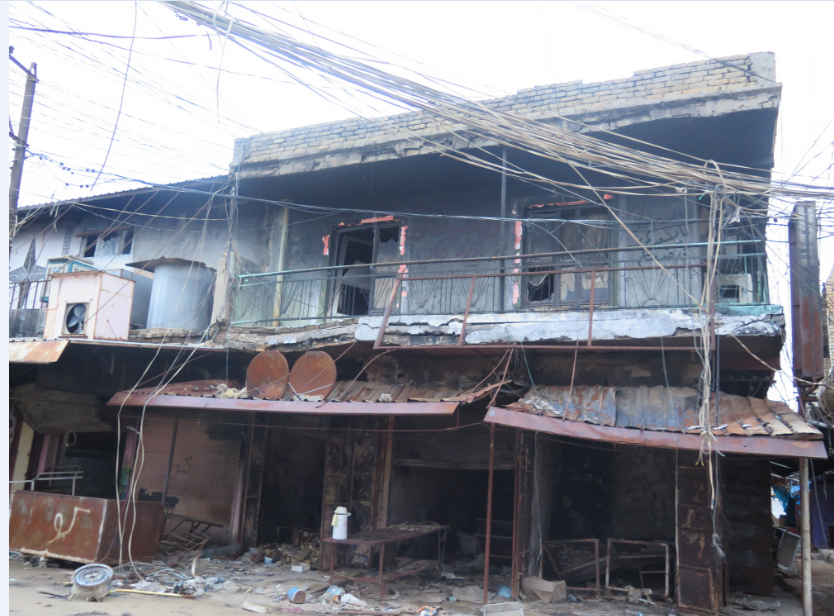
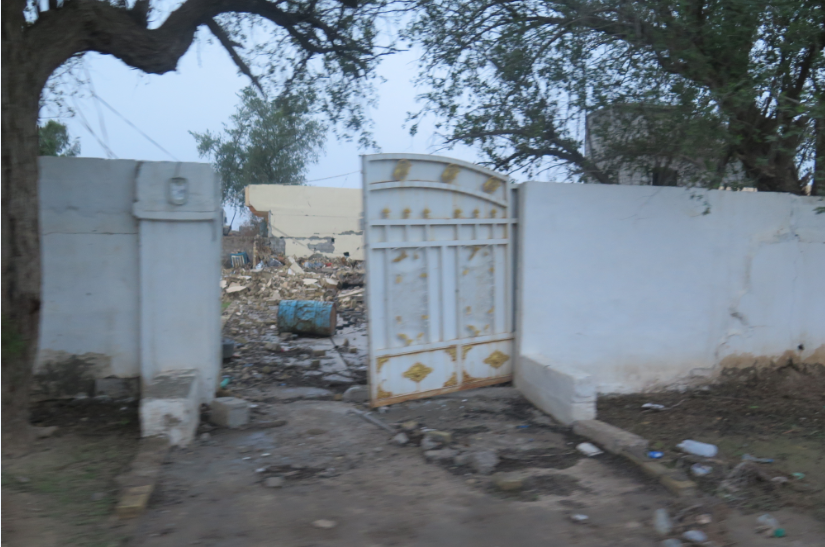
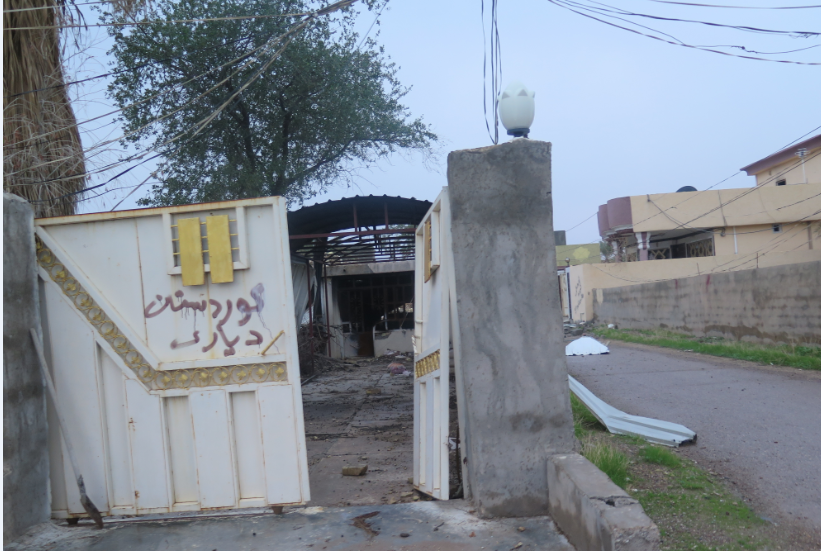
There's Jalawla which was 'liberated' a year ago -- November 2014.
Look how well it's doing . . .
Oh, wait.
Amnesty International's Donatella Rovera Tweeted the following this week:
-
#Iraq Jalawla city is completely empty, market & homes looted & burned down - so many lives & livelihoods destroyed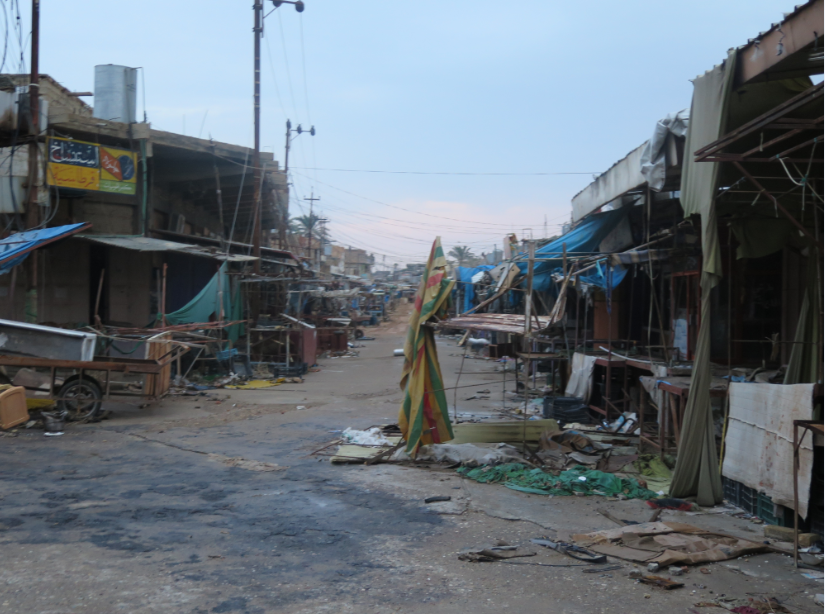
 Donatella Rovera
The cycle of violence in Iraq appears to continue with 'liberation.'
That was obvious this week in newly 'liberated' Sinjar.
We'll drop back to Thursday's snapshot:
Let's move over to liberated Sinjar and the peaceful Yazidis, so grateful to return to Sinjar that they hugged everyone and prayed.
Or something.
On All Things Considered (NPR), Alice Fordham reported on the reaction of some Yazidis.
FORDHAM: And he directs his anger at the Arab Muslims from his area who he says collaborated with the extremists. Not one of the Yazidis I speak to distinguishes between Arab Muslim families who stayed in ISIS-held areas and ISIS fighters. Some Arab leaders fear widespread revenge killing and looting. South of Sinjar, there's a string of ISIS-held villages mainly populated by Arab Muslims. I ask a Yazidi commander named Badr al-Hajji if there are civilians there.
And how 'bout this money quote?
-
'I'll warm myself on fire of revenge': Hatred hangs in ruins of
#Iraq's#Sinjar http://reut.rs/1OgZHJu

Monday, AFP reported that the Yazidis 'celebrated' their return to Sinjar by looting Sunni homes and setting them on fire.
AFP also reminds, "Rights group Amnesty International documented attacks by Yazidi militiamen against two Sunni Arab villages north of Sinjar in January, in which 21 people were killed and numerous houses burned."
Today, Isabel Coles (Reuters) visits
the area and hears from Yazidis such as one man who she sees loading
(stolen) sofas onto his truck and explains, "This is our neighbor's
house. I've come to take his belongings, and now I'm going to blow up
his house."
The circle of violence never ends while so many feel the government does not represent them.
Thursday morning we noted the use of the Paris attacks to sell war and how that accounted for a great deal of the media attention:
The horrors inflicted on France -- true ones, a genuine tragedy -- take place every day in Iraq, take place in Libya and in Egypt and in . . .
And no one gives a damn.
Our Lady of Salvation Church, to give but one example, is attacked in Baghdad October 31, 2010 and at least 58 worshipers were killed with at least 78 more left injured.
And it was a headline.
A minor blip.
CNN did not go wall-to-wall for even one day -- let alone days.
When the Islamic State declared war on Christians in Iraq (in a recorded message two days after the attack), this did not result in massive news coverage.
Nor did President Barack Obama begin to use the term "genocide" to describe how Iraq's Christian population was being persecuted.
Over 125,000 have been forced to flee.
The number killed is probably at least that.
(And killed by more than just the Islamic State. Shi'ites have targeted the Christian population as well.)
On the attack, we'll note this from Dirk Adriaensens' 2012 report "Were Iraqi Security Forces Involved in Baghdad Church Massacre" (Truth-Out):
On
31 October 2010, Our Lady of Salvation Church, in Baghdad's central
Karrada neighborhood, was attacked by "Al Qaeda." In the deadly attack,
gunmen stormed the building and gunned down the priest and worshippers,
before exploding their suicide vests. Despite an outcry against attacks
on Christians, the targeting of churches in Iraq has been a regular
feature since the US invasion of the country in 2003. In all, 68
worshippers died while attending church that day and another 98 were
wounded.
On
2 August 2011, an Iraqi court convicted three people and awarded them
the death penalty for their role last year in this siege and underscored
the uphill task faced by rulers in protecting religious minorities(65) - which are on the verge of extinction.
But
the Assyrian Christian Community, Iraqi bloggers and even some
politicians have openly accused the Iraqi government of mishandling the
October 31 attack:
a) They point out that the terrorists brought explosives and weapons to the church in cars with dark-tinted windows and no license plates that are only available to officials with high-level security clearance. This allowed them to get waved through checkpoints without being stopped.b) They also point to the slow reaction of the security forces and the botched handling of the rescue attempt itself. It still remains unclear how many of the victims were killed or wounded by the members of the Iraqi rescue team, who opened fire wildly once they burst into the church.c) A senior officer in the Iraqi police, who asked not to be identified because of the sensitivity of the subject, said that for the ten days prior to the attack, the Interior Ministry security forces gradually moved barriers closer to the church, until the terrorists could drive right up in front.d) Dr. Duraid Tobiya, who heads the Mosul section of the Assyrian Democratic Movement, the largest Christian political party in Iraq, told Newsmax, "I can't accuse the government directly because I haven't seen the evidence. But this is what we have heard from survivors and from eyewitnesses who talked to people who were inside."
Duraid
and other secular Christian leaders interviewed in northern Iraq
believe that the Shiite Dawa Party of Prime Minister Nouri al-Maliki,
which controls the Interior Ministry forces, was complicit in the attack
and that the Iraqi police has become the instrument of the ruling
party, not the state. He pointed out that right after the church
massacre, the Baghdad City Council, which is also controlled by the Dawa
Party, passed new laws banning liquor stores, nightclubs and
educational associations run by Christians. "Even the universities in
Baghdad imposed new dress codes on students and separated classes by
sex, like the Taliban."
Violence and more violence -- and the one who wants violence? Yes, her. Thursday, Hillary Clinton gave a major foreign policy speech calling for more destruction. We addressed some sections of the speech in that day's snapshot.
Bill Van Auken (WSWS) takes the speech on at length but we'll instead zoom in on his coverage of the questions Clinton was asked following her speech:
In a question and answer period following her speech, Clinton described her policy as “an intensification and acceleration” of the policies currently pursued by the Obama administration.
“We should be sending more special operators, we should be empowering our trainers in Iraq, we should be…leading an air coalition, using both fighter planes and drones” against a “broader target set.”
She added that the 3,500 troops that Obama has deployed to Iraq should be given “greater freedom of movement and flexibility,” i.e., they should be sent into combat with Iraqi government units.
Clinton also advocated stepped-up arming of Sunni and Kurdish forces in Iraq to fight ISIS, with or without the consent of the Shiite-dominated central government, warning, “if Baghdad won’t do that, the coalition should do so directly.”
She also proposed a policy to “retool and ramp up our efforts to equip viable Syrian opposition efforts,” while virtually in the same breath declaring, “There is not going to be a successful military effort at this point to overturn Assad,” and that regime change now could only be effected through a “political process.”
In the question and answer period, Clinton said that she disagreed with Obama on Syria, believing that the administration could have done “more earlier to try and identify indigenous Syrian fighters, and adding, “We could have done more to help them in their fight against Assad.”
In reality, Clinton at the time was warning Congress that US arms sent into Syria could end up in the hands of Al Qaeda. Massive amounts of arms were funneled into these forces by Washington’s principal regional allies—Turkey, Saudi Arabia, Qatar—under the supervision of the CIA.
In a brief moment of discomfort for the Democratic candidate, she was asked to respond to a statement by Republican presidential candidate Donald Trump that US regime change operations in Iraq and Libya had only created disasters. Her response: “It’s too soon to tell.”
More than 13 years after then-Senator Hillary Clinton voted for a US war of aggression against Iraq based upon lies about weapons of mass destruction, presidential candidate Clinton insists that the jury is still out on this criminal war, which slaughtered hundreds of thousands and turned millions into refugees.
Seriously, while regretful Democrats can claim that they never thought Obama would turn out to be the disappointment he has been, the same can’t be said about Clinton. Madame Secretary has a long pedigree and the bold print on the warning label is easy to read. There’s simply no excuse for anyone to vote for a proven commodity like Hillary and then complain at some later date, that they didn’t know what a scheming and hard-boiled harridan she really was. Clinton’s hawkishness is part of the public record. It’s right there for everyone to see. She voted for Iraq, she supported the Libya fiasco, and now she’s gearing up for Syria. Her bloodthirsty foreign policy is just slightly to the left of John McCain and his looneybin sidekick, Lindsey Graham. Simply put: A vote for Clinton is a vote more-of-the-same death and destruction spread willy-nilly across the planet in the endless pursuit of imperial domination. It’s that simple.
iraq
dirk adriaensens


